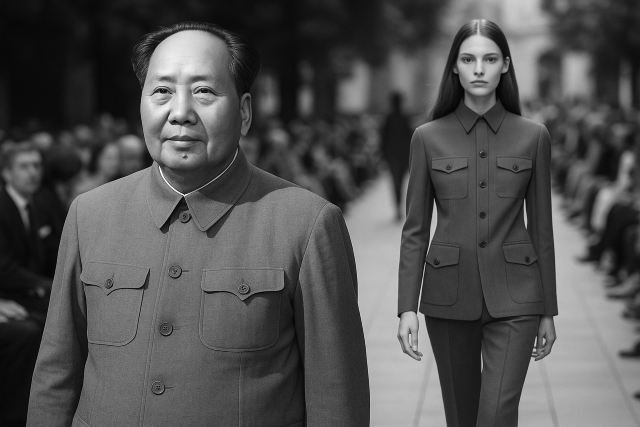
Once a symbol of political ideology, the Mao Dress has undergone a remarkable transformation. From its origins during China’s revolutionary era to its modern revival on global fashion runways, this minimalist garment reflects the fusion of politics, culture, and contemporary design.
Today, the Mao Dress is no longer just a uniform — it’s a statement piece that celebrates heritage while embracing modern aesthetics.
The Origins of the Mao Dress
The Mao Dress, also known as the Zhongshan suit or Mao suit in its early form, was named after Chinese leader Mao Zedong, who popularized it during the mid-20th century. It was designed to represent equality, modesty, and national identity — a stark contrast to the lavish Western suits of that era.
Historical Background
- Design Inspiration: The Mao Dress was inspired by the Sun Yat-sen suit, which symbolized the ideals of the early Chinese Republic.
- Cultural Significance: It represented socialist values — unity, discipline, and collective strength.
- Gender Neutrality: Both men and women wore the dress, symbolizing gender equality and social harmony.
The Mao Dress became an emblem of cultural pride, replacing bourgeois Western fashion with a uniquely Chinese identity.
The Structure and Symbolism of the Mao Dress
The design of the Mao Dress is minimal yet deeply symbolic. Every element of the garment held meaning that reflected political ideology and social values.
| Feature | Symbolism |
|---|---|
| Four Pockets | Represented the Four Virtues — propriety, justice, honesty, and shame |
| Five Buttons | Symbolized the five branches of government |
| Straight Collar | Signified discipline and equality |
| Hidden Seams | Emphasized modesty and unity |
This structured, high-collared design became a visual metaphor for revolution — a uniform of progress and equality.
The Mao Dress in the 20th Century: From Politics to Pop Culture
During the 1950s–1970s, the Mao Dress was seen as the national attire of China, worn by leaders, workers, and citizens alike. But by the late 1970s, as China opened to the world, its role began to evolve.
Global Recognition
- Western journalists and politicians associated the Mao Dress with Chinese political philosophy.
- Designers and historians began studying its cultural impact as an icon of uniformity and identity.
In Popular Culture
By the 1980s, Western designers like Pierre Cardin and Giorgio Armani reinterpreted the Mao-style jacket, introducing it to luxury fashion. Hollywood adopted the style too — often using it to portray power and mystery (think of the signature look of The Mandarin in Marvel movies or Dr. No in James Bond).
The Modern Revival of the Mao Dress in Fashion
In the 21st century, the Mao Dress has experienced a renaissance. Global fashion houses and Asian designers are reimagining it as a minimalist, gender-fluid garment that resonates with sustainability and slow fashion trends.
Why It’s Trending Again
- Minimalist Appeal: The clean lines and neutral tones align with modern minimalist aesthetics.
- Gender Fluidity: Designers embrace the unisex nature of the Mao Dress.
- Sustainability: Its simplicity encourages longevity and ethical production.
Modern Designers and Brands Using Mao Influence
| Designer/Brand | Approach |
|---|---|
| Guo Pei (China) | Blends imperial Chinese motifs with Mao-era silhouettes. |
| Ralph Lauren | Features Mao-style jackets in men’s luxury wear. |
| Alexander McQueen | Uses structured collars and revolutionary tailoring. |
| Uniqlo & COS | Mass-market minimalist reinterpretations. |
Styling the Mao Dress: From Heritage to High Fashion
The Mao Dress has evolved beyond politics — it’s now a global fashion staple adaptable to various styles.
For Women
- Pair a modern Mao Dress with statement jewelry and sleek heels for an elegant, minimalist look.
- Layer it with a long coat or structured blazer for contemporary sophistication.
For Men
- Combine a Mao-style jacket with tapered trousers for a sharp, modern silhouette.
- Add a turtleneck or silk shirt for a touch of European flair.
Styling Tip: Choose neutral colors like navy, gray, or olive — tones that preserve the historical feel while staying versatile.
Cultural Meaning and Symbolism Today
While originally associated with political revolution, the Mao Dress now carries a message of cultural identity, empowerment, and sustainability.
- Cultural Identity: For many young designers, it’s a bridge between tradition and globalization.
- Empowerment: The dress’s unisex design promotes equality and individuality.
- Sustainability: As fashion shifts toward ethical consumption, the Mao Dress’s simplicity represents timeless design over fast fashion trends.
According to a Business of Fashion report, minimalist and heritage-inspired fashion lines saw a 25% increase in demand in 2024 — reflecting a growing appetite for authenticity.
The Mao Dress in Global Runways and Street Style
Fashion capitals like Paris, Tokyo, and Milan have all witnessed reinterpretations of the Mao Dress on runways.
- Paris Fashion Week 2023: Several Asian designers showcased Mao-inspired coats and dresses emphasizing symmetry and form.
- Tokyo Streetwear: Youth culture adapted Mao-style jackets into oversized, avant-garde looks.
- Luxury Market: Brands like Prada and Dior have subtly incorporated Mao-inspired collars into capsule collections.
This demonstrates how the Mao Dress, once a symbol of revolution, now embodies creative rebellion in fashion.
Mao Dress vs. Mao Suit: Understanding the Difference
Although often used interchangeably, the Mao Dress and Mao Suit differ in subtle ways.
| Feature | Mao Dress | Mao Suit |
|---|---|---|
| Length | Usually knee-length or longer | Waist-length jacket and matching pants |
| Fit | Slightly tailored or flowing | Structured and boxy |
| Use | Worn by women and adapted for modern fashion | Worn primarily by men during Mao era |
| Symbolism | Cultural reinterpretation and empowerment | Political uniformity and revolution |
Understanding this distinction helps modern designers reinterpret each piece with authenticity and respect.
Why the Mao Dress Still Matters
The Mao Dress endures because it represents more than fabric — it symbolizes a cultural journey.
Key Reasons for Its Enduring Popularity
- Versatile Design: Fits seamlessly into both formal and casual wear.
- Cultural Pride: Connects wearers to Chinese heritage and identity.
- Fashion Longevity: Timeless structure that resists fleeting trends.
- Symbol of Empowerment: Its neutral design defies gender stereotypes.
As global fashion continues to value diversity and authenticity, the Mao Dress stands as a reminder of fashion’s power to tell stories across generations.
FAQs About the Mao Dress
1. What is a Mao Dress?
The Mao Dress is a high-collared, button-down garment inspired by the attire popularized by Mao Zedong. It reflects simplicity, equality, and modern reinterpretation in global fashion.
2. Who originally designed the Mao Dress?
The design was influenced by the Zhongshan suit created under Sun Yat-sen, which Mao Zedong later popularized as a political and cultural uniform.
3. Is the Mao Dress still worn today?
Yes, the Mao Dress remains a popular inspiration for both everyday wear and luxury collections worldwide.
4. How can I style a Mao Dress?
You can style it with neutral accessories and structured outerwear for a chic, minimalist look suitable for both men and women.
5. Why is the Mao Dress important in fashion history?
It represents the intersection of politics, culture, and design — evolving from a revolutionary uniform to a symbol of modern sophistication.
Conclusion: The Mao Dress — From Revolution to Reinvention
The Mao Dress has traveled a long way — from representing unity and revolution to becoming a symbol of modern, minimalist elegance. Its evolution reflects the world’s changing relationship with fashion: one that values heritage, sustainability, and identity.
In today’s globalized fashion scene, the Mao Dress stands not as a relic of the past but as a living icon — one that connects history with the future of style.