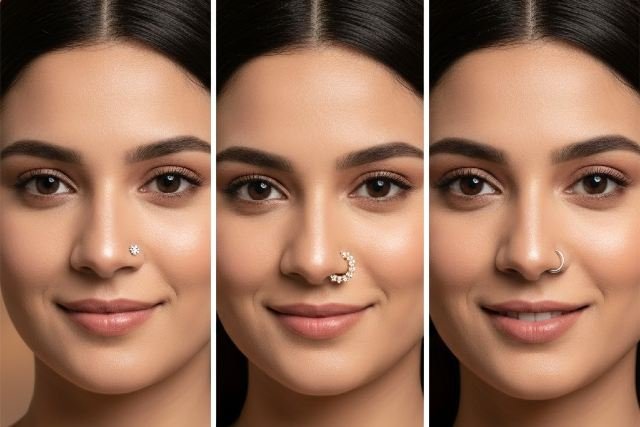
A nose pin is more than just a tiny piece of jewelry. For many, it’s a part of culture, identity, and style. From subtle studs to bold septum rings, the right nose pin can frame your face beautifully, highlight your features, and complement your everyday look or bridal glam.
In this Nose Pin style guide, you’ll learn how to choose the perfect design based on your face shape, nose type, skin tone, and lifestyle — plus care tips, material choices, and answers to common questions.
Disclaimer: This article is for style and general information only. Always follow professional piercing and hygiene advice from a trained piercer or medical professional.
What Is a Nose Pin and Why Does It Matter?
A nose pin is a small piece of jewelry worn in a nose piercing — usually on the nostril, but sometimes on the septum or high nostril. It can be:
- A nose stud (with a flat back or L-shaped / screw design)
- A nose ring or hoop
- A septum ring
- A clip-on nose pin (no piercing required)
In South Asia and parts of the Middle East, nose pins have deep cultural and sometimes religious significance, often associated with femininity, marital status, beauty, and tradition.
Today, nose pins are globally popular as a fashion accessory — worn by people of all genders, from minimalists to edgy trendsetters.
Quick Nose Pin Style Cheat Sheet
Here’s a quick overview before we dive deeper:
| Face shape | Best nose pin styles | Avoid (in many cases) |
|---|---|---|
| Round | Small studs, vertical designs, delicate hoops | Very large round hoops that widen the face |
| Oval | Almost everything: studs, hoops, septum rings | Oversized designs that overpower the features |
| Square | Soft round studs, small hoops, tiny floral designs | Very angular, boxy shapes |
| Heart-shaped | Tiny studs, dainty hoops, minimal designs near the nostril edge | Very heavy or low-hanging designs |
| Long/rectangular | Small hoops, horizontal or cluster designs, mid-size studs | Long vertical dangles that exaggerate length |
Treat this as a starting point, not a strict rule — your comfort and personal style matter most.
How to Choose a Nose Pin Based on Your Face Shape
1. Nose Pin for Round Face
If you have a round face, your goal is usually to add a bit of definition and length.
Best choices:
- Tiny diamond or gemstone studs
- Vertical designs (a slim, vertical bar or teardrop)
- Delicate small hoops that hug the nostril
Why they work:
They elongate and sharpen the look slightly without adding extra width. Small, sparkly nose pins draw attention upward and toward your eyes.
2. Nose Pin for Oval Face
An oval face is often considered the most balanced, so you can experiment freely.
Best choices:
- Simple nose stud (gold/silver/diamond)
- Hoops and rings of various sizes
- Septum rings or clickers for a bold statement
- Layered looks (nostril stud + septum ring, if your style and workplace allow)
Why they work:
An oval face handles both bold and minimal styles well. Just keep proportions in mind — if you choose a very large hoop, balance it with simple earrings or subtle makeup.
3. Nose Pin for Square Face
A square face has a strong jawline and angular features. A nose pin can help soften this.
Best choices:
- Round studs with a pearl, crystal, or small stone
- Soft floral designs or tiny circular motifs
- Small to medium hoops, not too thick
Why they work:
Rounded designs balance your angular features, creating a softer, more harmonious look.
4. Nose Pin for Heart-Shaped Face
A heart-shaped face is wider at the top and narrower at the chin.
Best choices:
- Very small studs (gold ball, tiny diamond, or colored stone)
- Thin hoops that sit close to the nostril
- Minimalistic designs that don’t pull focus downward
Why they work:
Dainty nose pins keep attention on your eyes and cheekbones rather than making the lower half look heavy.
5. Nose Pin for Long or Rectangular Face
If you have a long or rectangular face, you might want a nose pin that breaks the vertical line and adds balance.
Best choices:
- Tiny hoops that add width visually
- Cluster studs (like a small trio of stones)
- Horizontal or slightly wider designs
Why they work:
These styles visually widen the center of your face, softening the overall length.
Choosing a Nose Pin for Your Nose Type
Beyond face shape, your nose structure also plays a role.
1. Small or Narrow Nose
- Go for mini studs, tiny gemstones, fine gold or silver balls.
- Thin micro-hoops or huggie-style nose rings work great.
Large or heavy designs may overpower your features, so start small and adjust based on how you feel.
2. Broad or Wide Nose
- Medium-sized studs with a clear center stone can create a focal point.
- Slightly thicker hoops (not huge) can look balanced.
- Avoid extremely tiny jewelry if it gets visually lost.
The key is proportion: the nose pin should neither look tiny nor too dominant.
3. High Nose Bridge / Sharp Features
- Minimalistic studs and geometric shapes look very chic.
- Septum rings or delicate clickers can suit sharp, defined features well.
4. Bumpy or Crooked Nose
If you’re self-conscious about a bump or asymmetry, a nose pin can act like a distraction in a good way.
- Choose a small, bright stud on your preferred side.
- Avoid very large rings that highlight the entire nose contour.
Remember, your nose tells your story — many people embrace their natural shape and style their nose pin as a signature accessory.
Nose Pin Metals: Which One Is Best for Your Skin?
Choosing the right metal is about both style and safety.
Safe Starter Metals
Most professional piercers and dermatology resources recommend starting with:
- Implant-grade titanium
- Niobium
- 14k–18k solid gold (nickel-free)
- Surgical stainless steel (for those who aren’t sensitive)
These metals are less likely to cause reactions and are commonly used in medical and piercing jewelry guidelines.
Metals to Be Cautious With
If you have sensitive skin or a history of allergies:
- Be careful with cheap alloys, plated brass, or nickel-heavy jewelry.
- Nickel allergies are common in many countries, especially among women.
If you suspect an allergy, talk to a dermatologist or switch to titanium or high-quality gold nose pins.
Matching Your Nose Pin to Your Skin Tone
This is flexible and personal, but here’s a helpful guideline:
- Warm or medium skin tones (olive, golden, tan):
- Look beautiful with yellow gold, rose gold, and warm-toned stones.
- Cool or fair skin tones (pink, cool undertones):
- Silver, white gold, platinum, and cooler stone colors (blue, clear, purple) stand out.
- Deep and rich skin tones:
- Bright yellow gold, rose gold, and bold gemstones (emerald, ruby, sapphire tones) pop stunningly.
The easiest trick: hold both gold and silver near your face in natural light and see which makes your skin look brighter, not dull.
Types of Nose Pins: Studs, Hoops, and More
1. Nose Studs
Most popular and versatile. They come in:
- Ball studs (tiny gold or silver balls)
- Gemstone studs (diamonds, zircon, colored stones)
- Motif studs (flower, star, moon, leaf, paisley, etc.)
Back styles:
- L-shaped: easy to insert and remove for many wearers
- Screw / corkscrew: more secure, common in South Asia
- Flat-back labret: very comfortable for sleeping
2. Nose Rings or Hoops
Ideal if you want a more boho, edgy, or traditional look.
- Can be very thin and minimal, or thicker and more decorative.
- Available as seam rings, clickers, or captive bead rings.
3. Septum Rings
Worn in the septum (the cartilage between the nostrils):
- Can be bold or minimal.
- Often associated with edgy, alternative fashion, but also traditional in many cultures.
If your workplace is conservative, some retainer styles and flipped-up septum rings are more discreet.
4. Clip-On Nose Pins
Perfect if:
- You’re not ready for a piercing.
- Your family or workplace doesn’t allow piercing yet.
- You just want to try the look before committing.
They come as tiny clip studs or small hoops that gently pinch the nostril.
Lifestyle Factors: Daily Wear vs. Occasions
Everyday / Office-Friendly Nose Pin
- Choose small, subtle studs in gold, silver, or a clear stone.
- Avoid very large hoops or loud motifs if your environment is formal.
- Make sure the backing is comfortable so it doesn’t snag on masks or clothing.
Party, Festive, or Bridal Nose Pin
Many South Asian brides wear a nath (larger nose ring, sometimes attached to a chain).
For big occasions:
- Go for statement hoops, elaborate stones, or traditional designs.
- Coordinate with your necklace, earrings, and maang tikka if it’s a desi bridal look.
- If you’re not used to heavy nose pins, practice wearing them before the event.
Nose Pin Size Guide: Gauge, Diameter, and Stone Size
When buying online, you’ll often see terms like gauge and diameter.
- Gauge = the thickness of the post
- Common nostril piercing gauge: 20G (0.8 mm) or 18G (1.0 mm)
- Diameter (for rings) = how wide the ring is
- For most nostrils, 6–8 mm internal diameter works, but it depends on your anatomy.
Stone size (for studs):
- Subtle daily wear: 1–2 mm stone
- Dressy but not overpowering: 2–3 mm
- Statement look: 3 mm+
If possible, consult your piercer for exact measurements of your piercing.
Nose Pin Care and Hygiene Tips
Good care keeps your nose looking great and prevents infections.
- For fresh piercings: follow your piercer’s aftercare instructions strictly.
- Common guidance includes cleaning with sterile saline and avoiding touching with dirty hands.
- Avoid switching your nose pin too early (usually 8–12 weeks minimum for nostril piercings; check with a professional).
- Watch for signs of infection: redness, swelling, pain, discharge with odor — see a doctor if this happens.
For healed piercings:
- Remove and clean your nose pin periodically with mild soap and water (for appropriate metals).
- Check the fit and tightness so it doesn’t accidentally fall out.
FAQ: Nose Pin Style & Piercing Questions (Snippet-Optimized)
Which side should I wear a nose pin on?
Traditionally in some cultures (like parts of India), women often wear a nose pin on the left side, associated historically with Ayurveda and beliefs about women’s health.
In modern fashion, you can wear your nose pin on either side — choose the side you like more in the mirror or where your nose shape looks best.
What is the best nose pin for sensitive skin?
The best nose pin for sensitive skin is usually made of implant-grade titanium, niobium, or 14k–18k solid gold that’s nickel-free. These materials are less likely to trigger allergic reactions compared to cheap alloys or plated metals.
Can I wear a nose pin every day?
Yes, as long as your piercing is fully healed, the jewelry fits well, and you keep it clean. For daily wear, choose a small, smooth nose pin that doesn’t snag on clothes or masks easily.
How do I know what size nose pin to buy?
You’ll need to know:
- The gauge (thickness) of your piercing — often 20G or 18G.
- The diameter (for rings) or post length (for studs).
If you’re unsure, ask your piercer or measure an existing comfortable nose pin.
Can I switch from a nose pin stud to a hoop?
Yes — once your piercing is fully healed. Make sure:
- The hoop has the correct gauge and diameter.
- You insert it gently and stop if you feel sharp pain or resistance.
If you struggle, a professional piercer can change it for you quickly and safely.
Conclusion: How to Choose the Perfect Nose Pin for Your Face
Choosing the ideal nose pin is a mix of art, anatomy, and personal style. Start by understanding your face shape and nose type, then pick designs that balance your features — small studs for minimal elegance, hoops for bolder looks, or traditional naths and nose pins for special occasions.
Match your metal to your skin tone and sensitivity, prioritize safe materials like titanium or quality gold, and don’t forget aftercare and hygiene. In the end, the “perfect” Nose Pin is the one that makes you feel confident, comfortable, and authentically yourself.
Whether you’re getting your first nose pin or upgrading your collection, use this guide as your style companion — and let your nose jewelry become one of your favorite signature details.