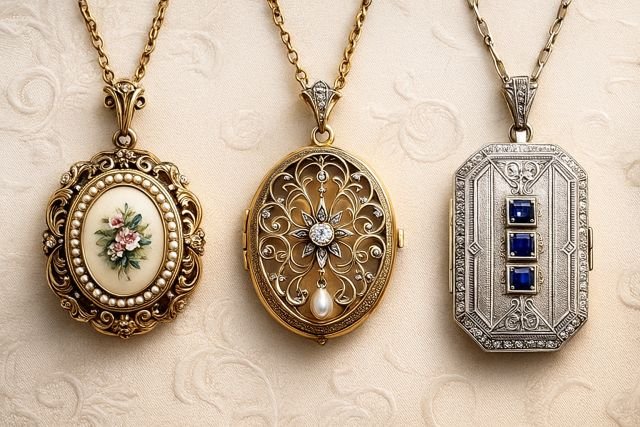
An Antique Locket is more than just jewelry — it’s a wearable piece of history. Whether passed down through generations, discovered in an antique shop, or treasured as part of a collection, antique lockets capture stories, artistry, and craftsmanship from past centuries. Among the most sought-after designs are the iconic Victorian, Edwardian, and Art Deco styles, each offering distinct aesthetic elements and historical significance.
In this guide, you’ll learn how to identify these antique locket styles, understand their value, and appreciate their unique artistic characteristics.
What Is an Antique Locket?
An Antique Locket is a decorative pendant — usually from over 100 years ago — that opens to reveal a small compartment. Traditionally, lockets held photographs, hair clippings, portraits, pressed flowers, or secret notes. They symbolize love, memory, and sentiment, and remain timeless keepsakes.
Common Antique Locket Materials:
- Gold (9k, 14k, 18k)
- Silver
- Gold-filled or rolled gold
- Enamel
- Seed pearls
- Gemstones like garnet, sapphire, turquoise, and diamond
Today, antique lockets are beloved by collectors, vintage jewelry enthusiasts, and people drawn to heirloom-quality accessories.
Victorian Era Antique Lockets (1837–1901)
Victorian lockets are known for their romantic symbolism, ornate details, and craftsmanship influenced by Queen Victoria’s personal taste.
1. Early Victorian (Romantic Period)
This era emphasized beauty, nature, and sentiment.
Design Characteristics:
- Floral motifs (roses, ivy, lilies)
- Engraved initials and monograms
- Heart-shaped lockets
- Lockets with miniature painted portraits
Materials Used:
- Rose gold and yellow gold
- Seed pearls
- Enamel in soft romantic colors
2. Mid-Victorian (Grand or Mourning Period)
After Prince Albert’s death in 1861, demand for mourning jewelry surged.
Mourning Locket Features:
- Black enamel or jet
- Onyx inlays
- Compartments containing braided hair
- Gothic-inspired engravings
These pieces are deeply emotional and historically significant.
3. Late Victorian (Aesthetic Movement)
Designs became more playful, artistic, and feminine.
Key Traits:
- Starburst patterns
- Bright gemstones
- Compact oval lockets
- Engraved birds, flowers, and crescents
Victorian lockets remain the most collected due to their emotional expressiveness and craftsmanship.
Edwardian Era Antique Lockets (1901–1910)
Edwardian jewelry embraced elegance, lightness, and sophistication. Techniques like milgrain and filigree flourished during this period.
Design Elements of Edwardian Lockets
Common Traits:
- Platinum and white gold
- Lace-like filigree
- Delicate diamond accents
- Soft curves and ribbon motifs
Popular Shape:
- Round or oval lockets with airy, openwork designs
These lockets were meant to appear graceful and luxurious — perfectly suited to the fashion of high society.
Influence of the Belle Époque
The Belle Époque era overlapped the Edwardian period, bringing even more delicacy and aesthetic refinement.
Typical Belle Époque Features:
- Bow motifs
- Floral garlands
- Pearl ornamentation
These lockets embody romance and aristocratic charm.
Art Deco Era Antique Lockets (1920–1940)
Art Deco jewelry is celebrated for bold geometric shapes, symmetry, and modern design innovation. This era departed from softness and embraced sleek elegance.
Design Characteristics of Art Deco Lockets
Key Features:
- Bold geometric shapes (rectangles, squares, hexagons)
- Sharp lines and contrasting colors
- Black onyx and emerald accents
- Platinum, white gold, and chrome
Motifs Inspired by:
- Architecture
- Industrial progress
- Egyptian revival (after King Tut’s tomb discovery in 1922)
Art Deco lockets remain highly collectible and often command higher prices due to their iconic style.
Comparing Victorian, Edwardian & Art Deco Antique Lockets
Here’s a quick comparison table to help identify which era your Antique Locket may belong to:
| Feature | Victorian | Edwardian | Art Deco |
|---|---|---|---|
| Common Shapes | Heart, oval | Round, oval | Rectangle, square |
| Key Materials | Gold, enamel | Platinum, pearls | Platinum, onyx |
| Design Style | Romantic, symbolic | Delicate, lace-like | Geometric, bold |
| Typical Motifs | Flowers, hearts | Bows, garlands | Zigzags, chevrons |
How to Identify Authentic Antique Lockets
Authenticating an Antique Locket is crucial for collectors and buyers.
1. Look for Hallmarks and Maker’s Marks
Hallmarks indicate:
- Gold purity
- Origin country
- Designer or manufacturer
Use trusted resources like the Antique Jewelry University.
2. Examine Craftsmanship
Authentic antiques typically feature:
- Hand engraving
- Intricate hinge construction
- Patina and natural wear
Machine-perfect designs may indicate modern replicas.
3. Check the Materials
Real antique lockets often use:
- Natural gemstones
- Old-cut diamonds
- True enamel
Glass or plastic components are red flags.
4. Ask for Provenance
Documentation, estate papers, or previous appraisals help confirm authenticity and increase value.
How to Care for and Preserve Antique Lockets
Proper care ensures your Antique Locket lasts another century — or more.
Cleaning Tips
- Use mild soap and warm water
- Gently polish with a soft cloth
- Avoid ultrasonic cleaners (they may damage old settings)
Storage Tips
- Store separately to prevent scratches
- Keep in a cool, dry place
- Wrap in anti-tarnish cloth
Professional Servicing
Have your locket examined every few years by a certified jewelry appraiser to maintain stone integrity and clasp safety.
Common Questions About Antique Lockets (FAQ Section)
1. How much is a Victorian antique locket worth?
Depends on materials, design complexity, and condition — typically $150 to $2,500+.
2. Are antique lockets valuable?
Yes. Lockets from well-known makers, or with original photos, hair, or gemstones, hold significant value.
3. Can you wear antique lockets daily?
Yes, but handle with care. Avoid water, lotions, and excessive heat.
4. How do I know if my locket is real gold?
Check for hallmarks (e.g., 9k, 14k, 18k) or have it professionally tested.
5. What makes Edwardian lockets special?
Their airy filigree, platinum settings, and delicate decorative motifs.
Conclusion
From the sentimental beauty of Victorian designs to the delicate romance of Edwardian filigree, and the bold geometric glamour of Art Deco, the Antique Locket remains a timeless piece of wearable history. Understanding these unique design eras helps you choose, appreciate, and preserve lockets that hold deep emotional and historical value. Whether you’re a collector, jewelry enthusiast, or simply love vintage charm, antique lockets offer unmatched character and craftsmanship worth treasuring.