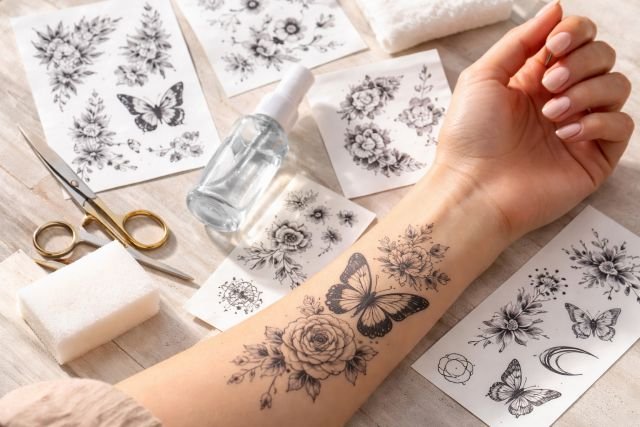
If you love the look of ink but aren’t ready to commit, tattoos fake tattoos are the easiest way to experiment with designs, placements, and aesthetics without permanence. Modern temporary body art looks far more realistic than old-school sticker sheets, and people use it for weddings, festivals, fashion shoots, cosplay, and even to test-drive a future permanent tattoo placement. The temporary tattoo market has grown into a sizable global category as demand rises across beauty and personal care.
Below is a detailed guide to the best styles, where they look most natural, how to apply them like a pro, and what to avoid for skin safety, all written in a mobile-friendly format with short paragraphs and clear subheadings.
What are tattoos fake tattoos?
Tattoos fake tattoos are temporary designs placed on top of the skin to mimic the look of real ink. Depending on the type, they can last from a single day to around two weeks, sometimes longer. Some forms sit on the surface of skin and may peel or fade, while stain-based options fade gradually as your skin naturally exfoliates.
You’ll often see these described as temporary tattoos, semi-permanent tattoos, transfer tattoos, jagua tattoos, henna or mehndi designs, and airbrush tattoos. Those labels aren’t interchangeable because each method uses different materials, longevity, and safety considerations.
Tattoos fake tattoos styles that look the most realistic
The most realistic results usually come from stain-based options like jagua and from high-quality, ultra-thin transfer tattoos with a matte finish. Airbrush tattoos can also look very real when applied by a skilled artist and sealed properly, especially for larger designs.
Realism comes down to three things: believable edges, believable tone, and believable placement. A design can be beautiful yet still read as “temporary” if it looks too glossy, too perfectly centered, or placed where real tattoos are uncommon.
Transfer tattoos
Transfer tattoos are the classic water-transfer method, but newer versions can be impressively detailed and far less shiny. They’re popular because they’re fast, affordable, and easy to swap out.
They work especially well when you want to test a permanent idea, like living with a forearm quote for a few days to see how it feels at work, how it looks when your arm bends, and whether you still like it after seeing it in a mirror repeatedly.
Typical wear depends on skin prep and friction, but many people get a few days of good-looking wear before edges begin to lift.
Jagua stain tattoos
Jagua tattoos stain the top layer of skin, often creating a blue-black shade that resembles real ink more closely than most stickers. Because it’s a stain, it fades gradually instead of peeling, which helps the illusion.
That said, “natural” does not automatically mean risk-free. Allergic reactions have been reported, including cases linked to genipin, a component associated with jagua products. If you’ve never tried jagua, patch testing is a smart step before applying a full design.
Henna and mehndi-style tattoos
Traditional henna creates a warm brown stain and is widely used for cultural celebrations, weddings, and ornate ornamental designs. It’s ideal when you want flowing, decorative patterns rather than “black ink” realism.
A critical safety note is the difference between traditional henna and so-called “black henna.” Many black henna products contain PPD, which is strongly associated with allergic contact dermatitis and can cause severe reactions and lasting skin marks in some people. Dermatology and consumer safety resources have repeatedly warned about this risk.
Airbrush tattoos
Airbrush tattoos use stencils and cosmetic pigments sprayed onto the skin. When done well, they look excellent in person and on camera, particularly for large pieces like chest designs, half sleeves, or bold graphic shapes.
They typically last a shorter time than stain-based options, especially if you sweat heavily or shower often, but they’re great for one-night events or weekend festivals.
Metallic, white ink, and UV-style temporary tattoos
These are designed to look intentionally decorative rather than like traditional ink. They’re popular for beach trips, parties, stage looks, and editorial shoots where a “body jewelry” vibe is the goal.
If you want them to look clean on camera, place them where friction is low and avoid heavy lotions that can increase shine or make them slide.
Best placement ideas for tattoos fake tattoos
Placement determines whether your temporary tattoo looks authentic. Some areas naturally read as “real tattoo zones,” while others look costume-like if the design is too big or too centered.
Forearm placement is one of the easiest ways to make tattoos fake tattoos look real. Both inner and outer forearm are common tattoo locations, and the surface stays fairly flat for transfers. A small trick is to angle the design slightly to follow your arm’s anatomy rather than placing it perfectly straight.
Upper arm and bicep placement works well for patch-style flash, animals, botanicals, and bold symbols. It’s also a lower-friction area, which helps longevity.
Shoulder and collarbone placement is ideal for fine-line florals, minimalist icons, and short script. It’s also popular for weddings and formal outfits because it can be revealed or concealed easily.
Ribcage placement can look extremely authentic because it’s a common permanent tattoo location. The challenge is application, because the area flexes with breathing and movement, so careful pressing and drying time matter.
Ankle and lower leg placement is great for dainty designs, ornamental patterns, and small flash. Longevity can be reduced by socks, shoes, and friction from walking.
Hand and finger placement is trendy but high-wear. Frequent washing and friction mean it fades quickly. It’s best for a single evening, a shoot, or a short event rather than multi-day wear.
How long do tattoos fake tattoos last?
Longevity depends on the type and your routine. Transfer tattoos often last a few days, though careful prep and low-friction placement can extend them. Jagua and traditional henna can last around one to three weeks because they stain the skin and fade gradually. Airbrush and metallic styles are often shorter-wear options, usually best for events.
You can extend wear by avoiding oils and heavy lotions over the design, reducing friction, and being mindful during showers. You can shorten wear by using warm water, gentle exfoliation, and oils for transfer tattoos, although stains will still need time to fade.
Pro application tips for realistic results
Start with skin prep that removes oils and residue. Clean the area with gentle soap and water, dry completely, and if your skin tends to be oily, a quick wipe with rubbing alcohol can improve adhesion. Avoid applying to irritated or broken skin.
Hair matters more than people think. If the area is hairy, trimming or shaving helps the design sit flat and prevents patchy transfer.
When applying a transfer tattoo, pressing longer and more firmly improves detail transfer and reduces the chance of weak edges. Many “bad” temporary tattoos are actually rushed applications.
After the tattoo dries, reducing shine is one of the biggest realism upgrades. A light dusting of translucent setting powder can take away the sticker-like reflectiveness that gives it away, especially in photos.
If you want the design to look more like lived-in ink, soften the edge appearance. Transfers can sometimes have a too-perfect border. Gentle blending around the perimeter with a clean makeup sponge can help the tattoo integrate visually with the skin tone.
Sealing can help for short events, but heavy sealants can crack and look worse over time. If you use a setting spray, keep it light and test first if you have sensitive skin.
Skin safety and what to avoid
The most important safety topic in this category is black henna. Consumer safety and dermatology sources warn that black henna may contain PPD, which is associated with severe allergic reactions including blistering and potential scarring. It’s not worth the risk for a temporary look.
The U.S. FDA has published consumer information addressing temporary tattoos and henna and encourages reporting adverse reactions. This guidance is useful because it frames temporary tattoos as cosmetic products that can still cause reactions in some individuals.
Jagua can also cause allergic contact dermatitis in some people. If you’re trying it for the first time, patch testing is the simplest way to reduce surprises.
If you experience intense itching, burning, swelling, blistering, or a rash that follows the tattoo outline, remove the product gently and consider medical advice, especially if symptoms worsen.
Common questions people have before trying tattoos fake tattoos
Are tattoos fake tattoos safe? Many are safe when made with skin-appropriate materials and used as directed, but reactions can occur. Avoid black henna because of well-documented allergy risks, and use patch tests for new products, especially stain-based ones.
How do I make a fake tattoo look real? Choose matte, ultra-thin transfers or jagua stains, place them in common tattoo zones like forearm or upper arm, prep skin to remove oils, and reduce shine after drying.
Which placement lasts the longest? Areas with lower friction, like upper arm, shoulder, and outer forearm, usually last longer than hands, fingers, feet, and inner thighs because washing and rubbing break down adhesives and pigments faster.
How do I remove tattoos fake tattoos quickly? Transfer tattoos usually come off with warm soapy water and an oil-based remover like baby oil, gently massaged and wiped. Stain tattoos like jagua and henna fade with exfoliation and time, so removal is more about speeding up the natural fade than wiping it off instantly.
Conclusion
Tattoos fake tattoos are the smartest way to explore body art without permanence. You can test placement, try different aesthetics, and build event-ready looks while staying flexible. For the most realistic results, prioritize matte, high-quality transfers or stain-based options like jagua, choose placements that match common tattoo zones, and prep your skin so the design sits cleanly. Just as important, follow safety best practices, avoid black henna due to PPD-related reaction risks, and patch test new products to keep the experience fun, not stressful.