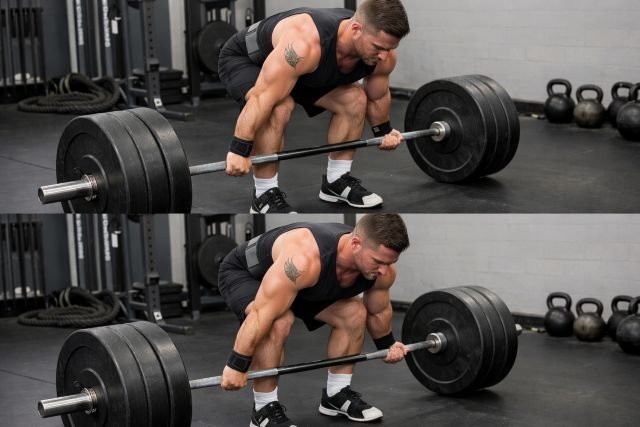
If your hook grip deadlift keeps slipping mid-rep, it’s almost never “weak hands” in the simple sense. Most of the time, the bar is rolling because of a small setup mistake (thumb position, bar sitting in the palm, or a bar path that drifts forward), and the grip just exposes it when the load gets heavy.
The good news: you can fix it fast — without abandoning hook grip, without switching to mixed grip, and without turning every deadlift day into a forearm workout. The key is understanding what actually makes hook grip work: you’re trapping the thumb between the bar and your fingers to prevent the bar from rotating. Done right, it’s brutally secure and is widely used in weightlifting because it keeps control during powerful pulls.
Below is a complete, practical troubleshooting guide to stop losing the bar mid-rep — plus coaching cues, progressions, and a quick diagnostic table you can use the next time the bar starts to peel out of your hands.
What “losing the bar” usually means in a hook grip deadlift
When lifters say they “lose the bar mid-rep,” it’s usually one of these:
- The bar rolls toward the fingertips as it leaves the floor, and the thumb gets “unwrapped.”
- The bar drifts forward away from the body, increasing torque on the grip.
- Sweat + smooth skin + poor chalk/tape choices reduce friction enough that the hook can’t stay cinched.
Hook grip is not magic friction. It’s a mechanical lock that still depends on correct bar placement, consistent pressure, and a bar path that stays close.
A useful mental model from coaching resources: the “hook” is created primarily between the thumb and the index/middle fingers compressing the bar, not by squeezing harder with the whole hand.
Hook grip deadlift setup: the “non-negotiables” that prevent bar roll
Put the bar in your fingers, not your palm
If the bar sits deep in the palm, it will roll as you pull — especially once the plates break the floor. That roll moves the bar toward the fingertips, which pries open your hook.
Quick check: when you look down at the start, the bar should sit closer to the base of the fingers (where calluses form), not buried in the center of the palm. This also reduces painful pinching and skin shear that can sabotage your grip.
Thumb wraps around the bar (it doesn’t lay alongside it)
A common “fake hook grip” is when the thumb lies almost parallel to the bar and the fingers press on top. That feels okay at light loads, then fails mid-rep when the bar tries to rotate.
In solid technique descriptions, the thumb wraps around the bar and the fingers trap it—usually index and middle, depending on hand size.
Finger stack: clamp the thumb with the index first
Most lifters lock the hook better when they prioritize the index finger pressure over the thumb first, then add middle finger pressure. If you crush with all fingers at once, many people push the thumb out of position.
Cue: “Thumb around, index clamps, then finish the wrap.”
Quick diagnostic table: why your hook grip deadlift slips mid-rep
| What you feel | Most likely cause | Fastest fix to try next set |
|---|---|---|
| Bar peels from fingers near knee level | Bar started too deep in palm and rolled | Start with bar in fingers; “knuckles down” at setup |
| Hook feels secure off floor, then fails past knees | Bar drifts forward / loses lat tension | “Squeeze oranges in armpits” and drag bar up legs |
| Thumb pain → grip opens early | Thumb pinned on nail/knuckle; poor finger placement | Re-wrap: thumb around bar, fingers over thumb pad (not nail) |
| Slips mostly when sweaty | Low friction (skin moisture, smooth bar, no chalk) | Chalk hands + bar contact points; keep hands dry |
| Slips on higher reps only | Fatigue + inconsistent setup between reps | Reset grip each rep; use dead-stop singles for practice |
The #1 form fix for mid-rep slipping: keep the bar glued to you
Even with perfect thumb placement, your grip will fail if the bar path is sloppy.
When the bar moves forward even a few centimeters, the moment arm increases and your hands have to resist more rotation. That’s why a deadlift that feels like “grip failed” is often a lat/position failure.
A widely used deadlift coaching point is to actively engage the lats and keep the bar close as it rises.
Cues that work in real gyms
- “Bend the bar around your shins.”
- “Drag the bar up your legs.”
- “Shoulders over the bar, lats tight, then push the floor away.”
If you implement only one change this week, make it this: tight lats + close bar.
Thumb pain is a slipping problem (because pain changes your pressure)
Hook grip has a reputation: it hurts until your thumbs adapt. But pain isn’t just discomfort—it changes your mechanics. When the thumb is irritated, most people subconsciously loosen pressure mid-pull, and that’s exactly when the bar rolls.
Common pain triggers include pressing fingers on the nail, pressing on knuckles, or not giving the grip time to adapt — issues that can be corrected with placement and loading strategy.
Thumb taping: when it helps (and when it backfires)
Thumb tape can reduce skin shear and make hook grip tolerable long enough to build the skill. Many lifting guides specifically recommend thumb taping for hook grip comfort and protection.
But here’s the catch: thick or slippery tape jobs can reduce “feel” and make you clamp less aggressively. The goal is protection without turning your thumb into a smooth cylinder.
Practical tip: use thin tape, minimal layers, and keep the thumb pad shape (don’t overwrap the joint).
Chalk: don’t just use it — use it correctly
Chalk is often treated like a superstition (“I chalked, so grip is solved”), but it’s really a moisture management tool. Moisture changes friction, and friction changes how easily the bar rotates in your hands.
There’s sport-engineering research on chalk as a friction modifier in climbing contexts, showing chalk can meaningfully affect friction depending on conditions and surface roughness.
There’s also lifting-adjacent research examining chalk in pulling tasks (e.g., clean grip mid-thigh pulls) and discussing friction/handling implications.
The “too much chalk” mistake
A thick, dusty layer can become its own interface that shifts around. A better approach is: rub in a light layer, then brush off excess so your skin texture still contacts the bar.
Also: chalk the bar lightly where your thumbs and fingers land (if your gym allows), not just your palms.
The hidden culprit: your hands are rotating because your wrists are passive
If your wrists extend back at the start (common when people “reach” for the bar), the bar tends to roll. Hook grip likes a more neutral, stacked wrist.
Cue: “Show your knuckles to the floor.”
That cue often subtly flexes the wrist and seats the bar in the fingers where it belongs.
Hook grip deadlift progression that builds a grip that doesn’t quit
If you’re trying to switch to hook grip and pull heavy in the same week, slipping is almost guaranteed. You need a short progression that builds tolerance and consistency.
A simple 3-week transition plan
Week 1: Hook grip on warm-ups + first working set only.
Week 2: Hook grip on all working sets up to RPE 7–8.
Week 3: Hook grip on all sets, but reset each rep (dead-stop) for perfect placement.
This strategy aligns with how skill acquisition works: frequent exposure without max stress. It’s also how many weightlifting coaching systems treat hook grip — it becomes “eventual necessity,” but you earn it with repetition.
Real-world scenario: why the bar slips on rep 3–5 (even if rep 1 is fine)
A common pattern: rep 1 is locked in, rep 2 okay, rep 3 the bar starts to peel.
That usually happens because you’re not fully re-setting the grip between reps. You drop the hips, breathe, and pull again — but your thumb didn’t re-wrap and the bar has migrated deeper into the palm.
Fix: after each rep, take half a second to re-seat the bar in the fingers and re-clamp the thumb. You’ll be shocked how much “grip strength” you suddenly have.
Should you switch to mixed grip or straps if hook grip keeps failing?
Hook grip is a great solution for many lifters because it keeps both hands pronated and can feel very secure once learned.
Mixed grip can work, but it brings trade-offs. Coaching guidance commonly warns about potential imbalances and emphasizes keeping the underhand arm straight to reduce biceps injury risk.
Straps are another tool: research on lifting straps in deadlifts suggests they can help maintain grip performance and perceived security while improving mechanical performance in some contexts.
If your goal is posterior-chain loading (not grip training) on high-rep or high-volume days, straps can be the smarter choice.
Featured snippet: Hook grip deadlift definition (simple)
Hook grip deadlift: a deadlift performed with both hands overhand (pronated), where the thumb wraps around the bar and the fingers clamp over the thumb to prevent the bar from rolling.
FAQ
Why does my hook grip slip even though it feels tight at the start?
Because the bar is usually rolling as it leaves the floor — either from starting too deep in the palm or from the bar drifting forward. Fix bar-in-fingers placement and keep the bar close with lat tension.
Should I tape my thumbs for hook grip deadlifts?
If thumb pain is making you loosen your grip mid-rep, tape can help reduce skin shear and make hook grip sustainable. Use thin tape and avoid bulky wraps that reduce feel.
Is chalk necessary for hook grip deadlift?
Not always, but it’s often the difference between a secure pull and a mid-rep slip when sweat is involved. Chalk changes friction conditions and helps control moisture, which can reduce bar rotation in the hands.
Is hook grip safer than mixed grip?
Hook grip keeps both hands pronated and avoids the asymmetry of mixed grip. Mixed grip can be effective but is commonly coached with precautions (switch sides, keep the underhand arm straight) due to potential imbalance and biceps risk.
Conclusion: lock in your hook grip deadlift and stop losing the bar
If you’re dropping or losing the bar mid-rep, don’t assume your hands are the problem. In most cases, the hook grip deadlift fails because the bar is in the wrong spot (palm vs fingers), the thumb isn’t truly wrapped and trapped, or your bar path drifts forward when lats go soft.
Start with the highest-impact fixes: bar in fingers, thumb wrapped, index finger clamp, chalk/tape as needed, and a “bar glued to legs” bar path. Build consistency with a short progression, reset your grip between reps, and you’ll get the thing hook grip is famous for: a pull that feels welded to your hands.