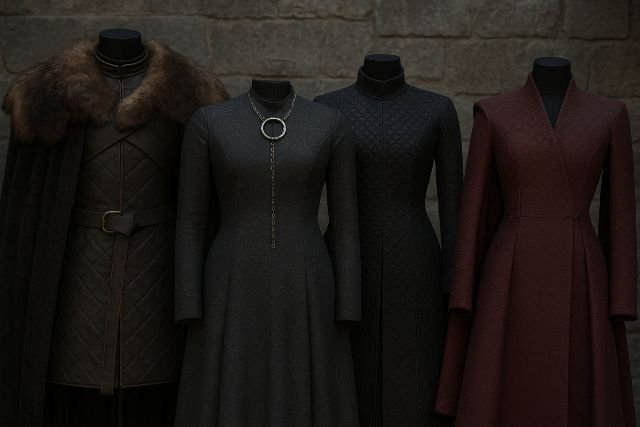
In Game of Thrones, fashion was never just clothing — it was a language of power, identity, and survival. The show’s richly detailed costumes revealed who held authority, who was vulnerable, and who was evolving.
From Cersei Lannister’s regal gowns to Jon Snow’s rugged furs, every character’s wardrobe was a reflection of their inner world. The Game of Thrones outfits, crafted under the visionary direction of Michele Clapton, became one of television’s most powerful storytelling tools — silently narrating emotional arcs and political shifts throughout the series.
The Art of Costume Design in Game of Thrones
Award-winning costume designer Michele Clapton led the creative vision behind the show’s fashion, with over 200,000 individual pieces designed for the cast across eight seasons. Her approach combined historical accuracy, symbolic storytelling, and handcrafted artistry.
“Clothing is the first thing an audience sees — it should immediately tell them who a character is and where they’re heading.”
— Michele Clapton, Costume Designer
Each outfit was meticulously built to reflect status, region, and personality, blending medieval European influences with the fantasy lore of Westeros.
Key Elements of Game of Thrones Costume Design
| Element | Purpose |
|---|---|
| Fabric & Texture | Denote region and wealth (e.g., fur in the North, silk in King’s Landing) |
| Color Palette | Symbolize mood, allegiance, and transformation |
| Silhouette | Represent power dynamics — structured for control, loose for vulnerability |
| Embroidery | Hidden motifs to tell emotional or political subtext |
Game of Thrones Outfits by Region and Culture
The world of Westeros is divided into regions — each with distinct climates, values, and political dynamics, expressed vividly through costume.
1. The North: Strength and Resilience
Characters like Sansa Stark, Arya Stark, and Jon Snow wore thick wool, fur-lined cloaks, and layered leathers — a reflection of both the climate and Northern stoicism.
- Fabrics: Wool, leather, fur
- Colors: Grey, blue, black — symbolizing endurance and loyalty
- Design Notes: Practical silhouettes emphasizing warmth and protection
Sansa’s evolution from soft silks to armored furs mirrored her journey from innocence to empowerment.
2. King’s Landing: Power, Wealth, and Decadence
The Lannisters and the royal court embodied luxury and manipulation through intricate embroidery, rich fabrics, and sharp tailoring.
- Cersei Lannister’s gowns showcased authority and seduction, using red and gold as visual signatures of dominance.
- Margaery Tyrell’s costumes blended sensuality and elegance, reflecting political cunning cloaked in charm.
3. Dorne: Freedom and Sensuality
The Dornish wardrobe was a blend of Mediterranean influences — lightweight fabrics, bright colors, and open silhouettes.
- Ellaria Sand and the Sand Snakes wore flowing wraps and leather harnesses, symbolizing female strength and sensual freedom.
- The styles contrasted sharply with the rigid Northern attire, reinforcing Dorne’s reputation for individuality.
4. The Free Cities and Essos: Exotic and Layered
From Daenerys Targaryen’s early slave garments to her dragon queen armor, Essos outfits evolved dramatically, mirroring her rise to power.
| Daenerys Phase | Outfit Type | Symbolism |
|---|---|---|
| Season 1 (Qarth/Slavery) | Tattered linen and blue hues | Innocence, vulnerability |
| Season 3 (Breaker of Chains) | Leather harnesses and dragon scales | Strength, transformation |
| Season 7–8 (Queen of Dragons) | Structured coats and metallic embroidery | Command, isolation |
Power Through Fabric: How Clothing Defined Hierarchies
In Game of Thrones, fabric choices were as political as they were aesthetic. Wealth and influence dictated not only how much fabric one wore but its origin and craftsmanship.
The Rich vs. The Poor
- Nobility: Silks, brocades, metallic threads, and embroidery.
- Commoners: Rough linen, wool, and undyed materials.
- Armor and Leather: Represented warriors and characters surviving on strength rather than status.
When Sansa was forced to live among the Lannisters, her finely embroidered gowns were replaced with plain dresses — a silent symbol of loss and captivity.
Game of Thrones Outfits as Storytelling Devices
The costumes were never static. They evolved with the characters, visually narrating emotional growth and downfall.
1. Sansa Stark: The Seamstress of Survival
Sansa’s wardrobe journey is one of the most symbolic in the show:
- Soft pastels → Dark armor tones: Innocence to authority.
- Light silk → Heavy wool and leather: Dependence to self-protection.
- Embroidery motifs: Direwolves and feathers representing loyalty and freedom.
Her coronation gown in the finale — a mix of wolf embroidery, fur shoulders, and metallic structure — epitomized her as the Queen in the North.
2. Cersei Lannister: Power Wrapped in Velvet
Cersei’s outfits reflected her psychological and political transformation:
- Early seasons: Feminine gowns and golden tones → projecting allure and wealth.
- Later seasons: Black and structured armor-like dresses → embodying isolation and control.
- The high collar and metallic embroidery mirrored the Iron Throne itself — power at any cost.
3. Daenerys Targaryen: From Chains to Conqueror
Daenerys’ clothing tracked her metamorphosis from enslaved girl to feared queen:
- Flowing blue dresses in Essos → freedom and hope.
- Dragon-scale motifs → growing strength.
- Final seasons’ militarized coats → conquest and isolation.
Michele Clapton revealed, “Daenerys’ white coat in Season 8 was meant to show her near divinity — beautiful, powerful, but increasingly untouchable.”
Color as a Symbol of Power and Emotion
Color psychology played a massive role in the Game of Thrones outfits. Each hue was carefully chosen to reflect internal states or alliances.
| Color | Meaning | Character Examples |
|---|---|---|
| Red & Gold | Power, ambition | Cersei & Lannisters |
| Blue | Purity, peace | Daenerys (early seasons) |
| Black | Authority, loss | Jon Snow, Sansa (later) |
| White | Transformation, isolation | Daenerys (finale) |
| Grey & Silver | Wisdom, neutrality | Northern and Stark designs |
Michele Clapton: The Vision Behind Game of Thrones Outfits
As the costume designer for seven of the eight seasons, Michele Clapton’s artistry blended storytelling with authenticity. Her team used real materials — from handwoven fabrics to custom-dyed leathers — ensuring every piece carried weight and realism.
Her Design Philosophy
- Costumes must serve the story, not distract from it.
- Subtle details speak volumes — embroidery often hinted at secrets or lineage.
- Regional contrast drives visual diversity, making Westeros feel vast and believable.
“Every outfit was a psychological extension of the character. We used fashion as their armor,” said Clapton in a Vogue interview.
Clapton’s work earned her multiple Emmy Awards and influenced global costume design in fantasy television, inspiring shows like The Witcher and House of the Dragon.
The Evolution of Game of Thrones Outfits Across Seasons
| Season | Fashion Evolution Summary |
|---|---|
| Season 1–2 | Introduction to regional styles — authentic, medieval simplicity |
| Season 3–4 | Power play and identity shifts — richer embroidery, complex designs |
| Season 5–6 | Political alliances reflected in wardrobe transitions |
| Season 7–8 | Darker tones, armor-inspired tailoring, symbols of ultimate power and downfall |
By the final season, Game of Thrones outfits were less about aesthetics and more about emotional armor — preparing characters for their final destinies.
The Impact of Game of Thrones Outfits on Modern Fashion
The show didn’t just dominate television — it shaped fashion trends worldwide. Designers and fans alike were captivated by the show’s medieval-meets-modern aesthetic.
Influence on Runways and Pop Culture
- Designers like Alexander McQueen, Elie Saab, and Zuhair Murad incorporated Thrones-inspired embroidery and structure into haute couture collections.
- The popularity of fur-lined coats, corset belts, and braided hairstyles skyrocketed during and after the series.
- Fashion editorials began featuring “Thronescore” — the fusion of fantasy and regal fashion for modern streetwear.
Cosplay and Cultural Legacy
- Game of Thrones remains one of the most cosplayed franchises worldwide.
- Fans recreate iconic looks such as Daenerys’ dragon queen outfit or Sansa’s coronation gown.
- The show has inspired academic research into costume psychology, exploring how fashion can influence narrative perception.
Fashion as Power: Thematic Lessons from Game of Thrones Outfits
1. Clothing as Armor
Characters often used clothing as psychological or physical armor — concealing vulnerability behind rich fabrics or strong silhouettes.
2. Gender and Power Dynamics
Female costumes evolved from restrictive gowns to warrior-like outfits, symbolizing empowerment and control over destiny.
3. Identity and Transformation
From Arya’s androgynous assassin attire to Sansa’s regal Northern style, each wardrobe change marked personal rebirth.
In Game of Thrones, fashion was not vanity — it was survival.
FAQs About Game of Thrones Outfits
1. Who designed the Game of Thrones outfits?
Costume designer Michele Clapton and her team created most of the show’s wardrobe, blending medieval influences with character psychology.
2. How did outfits change as the series progressed?
The costumes evolved from medieval simplicity to regal sophistication, symbolizing characters’ rise in power or moral descent.
3. What materials were used in Game of Thrones costumes?
Designers used authentic materials such as wool, leather, silk, fur, and hand-embroidered fabrics to maintain realism.
4. Which outfit is the most iconic in the series?
Sansa Stark’s coronation gown and Daenerys’ dragon-scale armor are widely regarded as the most iconic costumes for their symbolism and craftsmanship.
5. Did Game of Thrones outfits influence real-world fashion?
Yes — they inspired couture collections, high-street trends, and a resurgence of medieval and fantasy-inspired design aesthetics.
Conclusion: Game of Thrones Outfits — Fashion as a Weapon
The Game of Thrones outfits remain a landmark in cinematic costume design, proving that clothing can be a weapon, a shield, and a storyteller all at once. Through color, texture, and detail, Michele Clapton turned fashion into narrative — making every outfit a reflection of ambition, loss, and triumph.
From the silks of King’s Landing to the furs of the North, these costumes wove a tale of power, politics, and survival — reminding viewers that in Westeros, even a thread can hold meaning.