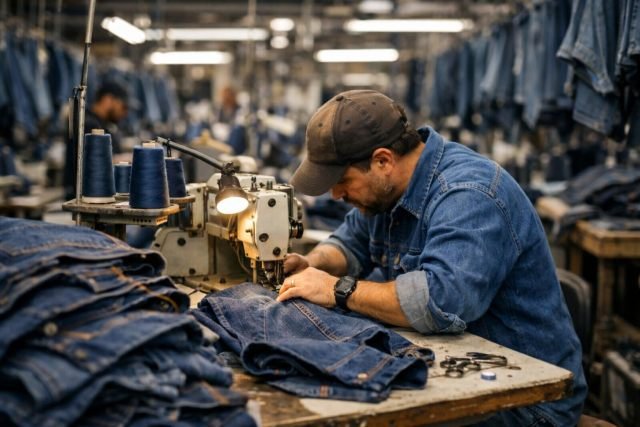
A jeans worker is a garment production professional who contributes to the creation of denim jeans, typically by cutting fabric, stitching panels, assembling components, finishing garments, or inspecting quality. These roles exist in both small tailoring setups and large export-oriented factories, and they are essential to the apparel industry’s ability to meet consumer demand for durable, fashionable denim.
Denim continues to be a global wardrobe staple, and because jeans manufacturing is still highly dependent on skilled hands, jeans worker jobs remain steady across many countries. The textile and garment sector employs tens of millions of people worldwide and is one of the largest sources of industrial employment, especially in developing economies. This makes the jeans worker profession an important career path for individuals who want consistent work and skill-based growth opportunities.
Quick Definition
A jeans worker job is a manufacturing role focused on producing denim jeans through fabric cutting, stitching, assembling, washing, finishing, and quality inspection.
Types of Jeans Worker Jobs in Denim Manufacturing
Jeans production involves many stages, and a jeans worker may specialize in a single operation or rotate between tasks depending on the factory structure. In large denim factories, production is divided into departments such as cutting, sewing, finishing, washing, and quality control. In smaller units, one worker may handle multiple stages, from stitching to attaching buttons and packing.
In the sewing department, jeans workers often operate industrial machines to stitch inseams, outseams, pockets, waistbands, and belt loops. Some specialize in reinforcement operations such as bar-tacking, which strengthens stress points. Others work in finishing departments where they trim threads, attach rivets and buttons, press garments, and prepare them for packing. Quality control workers examine stitch accuracy, measurements, fabric defects, and finishing details before jeans are approved for sale.
Key Skills Required for Jeans Worker Jobs
To succeed as a jeans worker, you need a combination of technical skill, speed, accuracy, and workplace discipline. Denim is thicker than many other fabrics, and its structure means mistakes are more visible and harder to correct. Because of this, factories often prefer workers who can maintain consistent stitching and follow production standards while meeting output expectations.
Technical skills include confidently handling industrial sewing machines, understanding stitch types such as lockstitch, chain stitch, and overlock, and managing thread tension to avoid skipped stitches or weak seams. Jeans workers also benefit from knowing how to work with different denim types, including rigid denim and stretch denim, because each behaves differently during stitching and finishing.
Quality awareness is equally important. A jeans worker must be able to detect errors such as uneven seam allowance, incorrect pocket placement, loose thread ends, broken stitches, and inconsistent sizing. In many factories, workers are expected to produce quickly, but speed without quality leads to rework and rejection, which can reduce earnings and limit promotion opportunities.
In addition to technical ability, physical stamina matters. Jeans workers often sit for long hours operating machines, while some roles require standing at cutting tables, ironing stations, or packing lines. Because the work is repetitive, basic ergonomic habits such as proper posture, short stretch breaks, and correct seat height can help prevent long-term back pain and wrist strain.
Soft skills also play a major role in long-term success. Reliable jeans workers tend to be punctual, cooperative with line supervisors, and willing to learn additional operations. Workers who demonstrate calm focus under pressure and maintain quality during busy seasons are usually prioritized for bonuses and promotions.
Jeans Worker Salary: How Much Do Jeans Workers Earn?
Jeans worker salaries differ widely across regions and factory types. In countries where garment production is export-based, wages are often set around minimum wage policies, but skilled operators can earn more due to productivity bonuses or piece-rate pay systems. In high-wage countries, jeans worker roles are often categorized under sewing machine operators, garment assemblers, or textile production workers.
A beginner jeans worker or helper typically earns lower wages because training and supervision are required. As skill level increases and workers can handle more complex operations such as double-needle stitching, bar-tacking, waistband attachment, or quality inspection, earnings usually rise. Supervisory roles like line leader or floor supervisor offer higher income and better stability.
Many denim factories pay workers using piece-rate systems, which means your earnings increase when you produce more units. This can be beneficial for fast and accurate workers, but it can also create stress because a worker’s income may depend on speed and daily target completion. In addition, mistakes can lead to deductions or unpaid rework, so quality directly affects pay.
Work Environment: What Is It Like to Be a Jeans Worker?
The jeans worker work environment depends on where you are employed, but most jobs are located inside garment production units, denim factories, or contract stitching centers. In large factories, jeans workers usually work on production lines with many other operators performing specialized tasks. The environment often includes loud machine noise, strong lighting, and constant movement of bundled garment parts between stations.
In peak seasons, jeans workers may face long hours and strict production targets. The pressure to complete daily quantities can be intense, especially in piece-rate systems. However, well-managed factories maintain workflow balance, allow rest breaks, provide clean ventilation, and follow safety standards that protect workers from injury and fatigue.
Some jeans worker roles involve exposure to additional risks. For example, denim washing and processing workers may deal with chemicals used in enzyme washing, bleaching, or stone wash techniques. Finishing departments involve pressing machines and steam irons that can cause heat-related discomfort. Cutting departments can involve sharp blades and heavy fabric layers, which require extra attention to safety procedures.
Daily Responsibilities of a Jeans Worker
The daily work routine of a jeans worker depends on their department. In stitching roles, the worker starts by setting up the machine with correct thread type, needle size, and tension control. They then stitch assigned garment components, such as seams or pockets, and pass the bundle to the next station. The work is repetitive, but consistency is critical because jeans quality depends heavily on uniform stitching.
In the cutting department, workers spread denim fabric layers, check defects, align patterns, cut pieces using industrial cutting tools, and bundle parts for sewing lines. Finishing workers attach rivets and buttons, trim loose threads, press garments, apply tags, and pack jeans for shipping. Quality inspectors measure garment dimensions and check for defects before approving jeans for packaging.
Career Growth Path: From Beginner to Supervisor
Jeans worker jobs offer meaningful career growth for people who build skills over time. Many workers start as helpers, learning basic garment handling and supporting machine operators. With practice and training, they progress to machine operator roles and eventually become multi-skill operators who can handle multiple sewing operations. These workers are more valuable because they can fill shortages and support production during high-demand periods.
From there, some jeans workers specialize in quality control, bar-tack reinforcement, or finishing operations, which often pay better due to technical complexity. Workers with leadership ability may move into line leader roles, where they manage production flow, support operators, and help maintain targets. With experience, a line leader can become a floor supervisor, and in some factories, supervisors eventually advance into production planning or training roles.
The fastest path to promotion is usually learning multiple operations and consistently producing high quality work. Factories often reward workers who reduce defects and maintain stable performance under pressure.
How to Get a Jeans Worker Job
If you want to get hired quickly as a jeans worker, focus on mastering basic machine control and denim handling. Many factories test candidates through practical stitching trials, so your ability to stitch straight seams, maintain tension, and manage speed matters more than formal education.
The best strategy is to start with entry-level roles in factories that offer training, then gradually learn more operations as you gain confidence. Even if you start as a helper, showing strong discipline, learning speed, and a willingness to work across departments can lead to rapid promotion. Demonstrating consistent quality during trial shifts is one of the strongest ways to secure permanent employment.
Tools and Machines Jeans Workers Commonly Use
Jeans workers commonly use industrial sewing machines designed for heavy fabric. Single needle machines are used for basic stitching operations, while double needle machines are used for parallel stitching details common in denim. Overlock machines handle edge finishing, bar-tack machines reinforce stress points, and button and rivet machines complete denim hardware applications. Pressing equipment, steam irons, and packing tools are also part of the typical denim production environment.
Understanding how to safely operate these machines and perform basic maintenance such as cleaning, oiling, and needle replacement is a valuable skill that increases employability.
Realistic Case Scenario: A Day in a Denim Stitching Line
A jeans worker in a factory often begins their shift by checking machine setup and ensuring thread tension is correct. After receiving a bundle of cut denim parts, the worker performs a single operation repeatedly, such as stitching inseams or attaching pockets. Once their task is finished, they pass the bundle to the next station. During peak demand periods, production targets increase, and workers are expected to maintain speed while keeping defect rates low.
This scenario reflects the reality of factory production, where consistency, discipline, and endurance can directly impact both income and job stability.
Jeans Worker Job Outlook: Is It Still a Good Career?
Although automation is increasing in garment production, jeans worker roles remain in demand because denim is difficult to fully automate. Variations in fabric thickness, fashion design changes, and the need for manual finishing keep human skill essential. However, the role is evolving, and workers who upgrade skills — especially in quality control, multi-operation capability, and machine maintenance — will have the strongest long-term job security.
Workers who remain limited to a single low-skill operation may face more competition and slower wage growth. In contrast, multi-skilled operators and quality-focused professionals often experience better income stability and faster promotion opportunities.
FAQ: Jeans Worker Jobs
What does a jeans worker do?
A jeans worker produces denim jeans by cutting fabric, stitching panels, assembling components, attaching buttons and rivets, finishing garments, and checking quality before packing.
Is jeans worker a skilled job?
Yes. Entry-level roles exist, but advanced denim stitching, machine handling, finishing operations, and quality inspection require skill and training.
How much does a jeans worker earn?
Earnings depend on location, experience, and factory type. Skilled denim operators and specialists often earn significantly more than helpers, especially in piece-rate systems.
Is jeans worker work physically demanding?
Yes. Jeans workers often work long hours, repeat motions, and handle heavy fabric layers. Ergonomic practices and safety routines help reduce long-term strain.
What skills help you get hired faster as a jeans worker?
The most valuable skills include industrial sewing machine control, speed with quality consistency, denim fabric handling, basic machine maintenance, and strong workplace discipline.
Conclusion: Is a Jeans Worker Job Worth It?
A jeans worker job is a practical, skill-based career with steady demand in the denim industry. It can be especially rewarding for individuals who want employment opportunities without needing advanced academic qualifications. The best path to long-term success is building strong technical skills, maintaining consistent quality, learning multiple operations, and following safe work habits that protect health over time.
If you want reliable work, skill growth, and the opportunity to advance into better-paying roles such as quality control, specialist operator, or line supervisor, jeans worker jobs can be a strong and stable career choice.