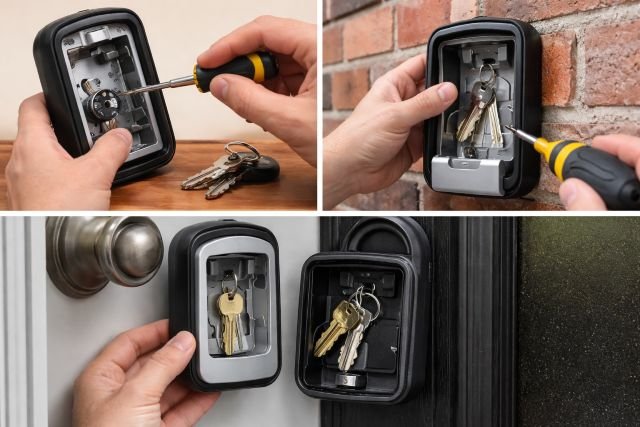
What Is a Lock Box Key Lock and Why It Matters
A lock box key lock is a secure container designed to hold a physical key behind a coded locking mechanism. It is commonly used by homeowners, landlords, real estate professionals, cleaners, contractors, and property managers who need to grant temporary or shared access without duplicating keys. The convenience of a lockbox makes it an essential access tool, but that same convenience can become a security risk if it is not managed correctly.
Security statistics show why this matters. According to FBI crime data, a significant portion of burglaries involve unlawful entry without forced access, meaning doors were unlocked or access was obtained without breaking anything. This highlights how compromised keys and shared access points often create vulnerabilities rather than broken locks. A poorly managed lock box key lock can unintentionally act as an open invitation instead of a safeguard.
Common Types of Lock Box Key Lock Mechanisms
Understanding the type of lock box key lock you own is the first step toward resetting or securing it correctly. Mechanical dial lockboxes use a rotating combination wheel and are valued for durability and battery-free operation, although they can be sensitive to dirt and wear. Push-button mechanical lockboxes rely on a coded sequence of buttons and are popular for their speed and ease of use, especially in service and real estate settings. Four-digit wheel lockboxes offer simplicity and compact design but usually provide moderate security rather than high resistance.
Electronic lock box key locks are increasingly common and may use keypads, Bluetooth connectivity, or mobile applications. These models often support time-limited access and activity logs, making them useful for controlled environments, though they rely on batteries and software reliability.
How to Reset a Lock Box Key Lock Safely
Resetting a lock box key lock should always be done carefully and never rushed. The most important rule is that the lockbox must be open before attempting any reset. Reset mechanisms are typically located inside the door, behind the key compartment, or on the back of the unit. Once reset mode is engaged, the new code should be set slowly and deliberately, followed by multiple tests before closing the box.
Testing the new combination while the lockbox remains open prevents accidental lockouts. Many lockouts occur because users skip this step and only discover an error after the door is shut.
Resetting a Mechanical Dial Lock Box Key Lock
Dial-style lockboxes require precision. After opening the box with the current combination, the reset lever inside must be moved into position. The dial is then rotated to the new code, carefully aligned with the indicator mark. Once the reset lever is returned to its original position, the dial should be spun several times to clear it before testing the new combination repeatedly.
Small alignment errors are the most common cause of dial lock failures. Even a slight misreading of the indicator line can result in a code that appears correct but does not open the box once closed.
Resetting a Push-Button Lock Box Key Lock
Push-button lock boxes usually include a reset switch or pin inside the housing. Once the box is open, reset mode is activated and the new button sequence is entered. After exiting reset mode, the buttons should be cleared and tested multiple times.
Codes that follow obvious patterns or use very short sequences are easier to guess and should be avoided. A thoughtful combination improves security without reducing usability.
Resetting a Four-Digit Wheel Lock Box Key Lock
Four-digit wheel models are reset by opening the lockbox and activating the internal reset lever or button. The wheels are then turned to the new code before returning the lever to its original position. After scrambling the wheels, the new combination should be tested several times.
These lockboxes are best suited for low- to medium-risk scenarios. If the stored key provides access to valuable assets or multiple entry points, upgrading to a more secure model is recommended.
Resetting an Electronic Lock Box Key Lock
Electronic lock box key locks vary by manufacturer, but most resets require an admin code, master reset function, or mobile app control. Battery condition should always be checked first, as low power can cause inconsistent behavior. After resetting, users should confirm that access permissions, time limits, and audit features are functioning correctly.
In professional environments, temporary access should always expire automatically. Real estate access standards, for example, require short-lived codes to prevent lingering authorization after a showing or service visit.
When Resetting Is Not Enough and Replacement Is Necessary
A lock box key lock should be replaced when physical integrity is compromised. Signs such as bent shackles, sticking buttons, slipping wheels, corrosion, or internal rust indicate that the mechanism can no longer be trusted. Repeated reset failures often signal mechanical wear rather than user error.
Security frameworks like those outlined by NIST emphasize that physical access controls must resist defeat and remain effective over time. When a lockbox no longer performs reliably, replacement is a security upgrade rather than an inconvenience.
How to Replace a Lock Box Key Lock
Replacing a lock box key lock usually means installing a new unit rather than repairing the old one. Some models allow shackle replacement, but most consumer-grade lockboxes are designed as sealed units. Upgrading from a basic mechanical model to an electronic lockbox can add access tracking and time-based permissions, which significantly improves accountability.
A common real-world example involves vacation rental owners who experience repeated guest lockout issues due to corrosion or wear. Replacing the lockbox and relocating it under weather protection often resolves both access and security concerns.
How to Secure a Lock Box Key Lock Properly
Proper security starts with smart placement. A lockbox should be attached to a solid structure that cannot be easily cut or removed, while avoiding overly visible locations that advertise where the key is stored. Code management is equally important. Codes should be changed after every temporary access event, such as contractor work or guest stays, and immediately after a lost key or suspected compromise.
Layered security further reduces risk. Using a dedicated service key instead of a master key limits damage if access is abused. Regular maintenance, including cleaning and battery replacement, ensures the lockbox remains reliable and resistant to failure.
Troubleshooting Common Lock Box Key Lock Problems
When a lock box key lock fails to open despite the correct code, alignment errors, debris, or worn components are often the cause. Applying steady pressure, clearing dirt, and adjusting wheel alignment can resolve many issues. For electronic models, battery replacement solves a large percentage of failures.
If safe troubleshooting does not work, professional locksmith assistance is often safer and cheaper than forcing the lockbox open and risking property damage.
Frequently Asked Questions About Lock Box Key Locks
A lock box key lock should always be reset while open to avoid permanent lockouts. Codes should be changed whenever temporary access ends, particularly in rental or service situations. Lockboxes are generally safer than hiding keys, but only when codes are managed responsibly. The most secure installations are discreet, weather-protected, and anchored to solid structures.
Conclusion
A lock box key lock provides convenience only when it is managed correctly. Resetting the code properly, replacing worn hardware at the right time, and treating access as temporary by default transforms a lockbox from a weak point into a reliable security tool. Consistent testing, thoughtful placement, and disciplined code rotation are the real keys to long-term safety and peace of mind.