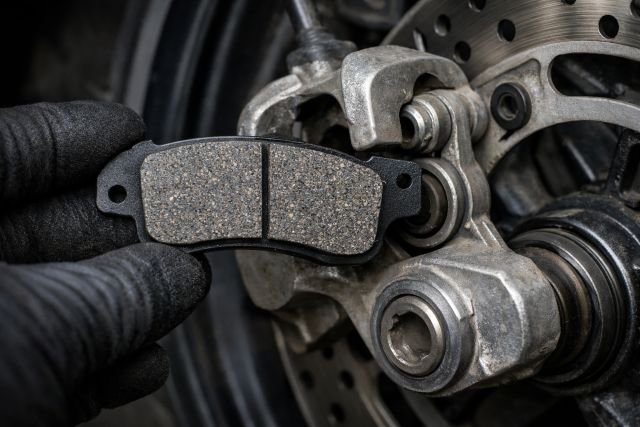
If you’ve ever been annoyed by squeaky brakes or a harsh, grabby pedal feel, organic brake pads might sound like the perfect solution. They’re widely known for delivering quiet braking, smooth engagement, and good everyday comfort, especially in normal city driving. For many drivers, organic brake pads feel more refined than metallic alternatives, with less vibration and a more predictable response — exactly what you want when you’re commuting, driving kids to school, or crawling through traffic.
But are organic brake pads truly the quietest and smoothest option, and what do you give up in exchange? In this complete guide, you’ll learn how organic brake pads work, why they tend to be quieter, what they’re best for, how they compare to ceramic and semi-metallic pads, and what to watch out for before you buy. You’ll also get practical, real-world tips to prevent noise, extend pad life, and choose the right material for your driving style, backed by research and reputable sources.
What Are Organic Brake Pads?
Organic brake pads are a brake pad type made primarily from non-metallic materials bonded together with resins. Today, most organic pads fall into the category of NAO (Non-Asbestos Organic) because asbestos is no longer used due to serious health risks. Instead, manufacturers use combinations of rubber, glass fibers, carbon compounds, aramid fibers, fillers, and heat-resistant resins to create a pad that offers comfort-focused braking.
Organic brake pads are often recommended for drivers who prioritize low noise, smoothness, and everyday drivability rather than maximum bite under extreme heat.
Why Organic Brake Pads Are Often Quieter and Smoother
The reason organic pads are usually quieter comes down to material behavior. Organic compounds are generally softer and more compressible than metallic pads. That softness helps absorb vibration and reduce the high-frequency squeal that happens when braking forces excite the pad, caliper, and rotor like a tuning fork.
Research into brake noise and vibration consistently points to the importance of pad damping and compressibility. In one study using standardized NVH testing, pad material design (including fiber choices) influenced squeal and vibration outcomes, with improvements linked to better damping behavior.
That’s why organic pads are often described as “quiet” and “smooth.” They don’t just stop the car; they tend to do it with less drama.
Organic Brake Pads and the “Smooth Engagement” Feeling
A big reason drivers love organic brake pads is the way they feel at the pedal. Many organic compounds deliver a more progressive friction curve in low-to-medium braking temperatures, which translates into a smoother initial bite and less harshness during stop-and-go driving.
Some recent research summaries on brake pad performance note that organic pads are associated with lower noise and smoother braking, particularly under everyday conditions.
This is especially helpful if your passengers are sensitive to sudden braking feel. If you’ve ever swapped to a more aggressive pad and noticed it feels “grabby,” organic pads usually sit at the opposite end of that spectrum.
The Biggest Trade-Off: Heat Resistance and Wear Rate
Here’s the reality check. Organic brake pads are comfortable, but they’re not built for heavy abuse.
Because organic pads rely heavily on resins and softer compounds, they can wear faster and lose effectiveness when temperatures climb. Under repeated hard stops, downhill mountain driving, towing, or spirited performance driving, organic pads are more likely to show brake fade compared to semi-metallic compounds designed for high heat.
This trade-off is widely acknowledged in technical comparisons and performance summaries of friction materials. General brake pad material guides regularly describe organic pads as quiet and rotor-friendly but weaker under extreme conditions.
So if you mainly drive calmly in town, organic pads can be an excellent choice. If your driving regularly pushes the brakes, they might not be.
Organic Brake Pads vs Ceramic Brake Pads: Which Is Quieter?
Many drivers wonder whether organic brake pads are quieter than ceramic pads. The answer is: often yes, but it depends on the pad quality and installation.
Ceramic pads are popular because they offer low dust, long life, and quiet operation in many cases. However, ceramic compounds can still produce noise if the pad isn’t bedded in properly or if the rotor condition is poor. Organic pads are naturally good at absorbing vibration, which is one reason they’re frequently considered the smoothest-feeling option for daily driving comfort.
Some consumer-facing technical guides rate organic pads as “quiet” and ceramics as “quiet” as well, but describe organic pads as the softer, more comfort-oriented compound overall.
The biggest difference tends to show up in dust and longevity. Ceramic pads often last longer and produce less visible dust, while organic pads may wear faster but can feel more gentle and forgiving.
Organic Brake Pads vs Semi-Metallic Pads: Comfort vs Performance
If you want the clearest comparison, it’s this: organic brake pads prioritize comfort, while semi-metallic pads prioritize heat performance.
Semi-metallic pads contain metal fibers like steel or copper, which helps dissipate heat and maintain braking performance under stress. That makes them great for heavy vehicles, towing, aggressive driving, and demanding conditions. However, those same metal fibers can increase noise, dust, and rotor wear, especially in daily driving where the pads never reach their ideal operating temperature.
Many brake pad friction material comparisons explain this pattern consistently: organic pads tend to be quieter and gentler on rotors, while semi-metallic pads tend to stop harder and tolerate heat better, but can be noisier and dustier.
So if your priority is a quiet, smooth commute, organic brake pads are often a better match. If your priority is maximum stopping under harsh conditions, semi-metallic pads usually win.
Are Organic Brake Pads Good for Daily Driving?
Yes, and this is where organic brake pads shine.
Organic pads are often a great fit for daily driving because most commuting happens in a temperature range where organic compounds perform well. You’re not repeatedly braking from highway speeds at maximum force, and you’re not generating extreme rotor temperatures. In this environment, organic pads deliver what most drivers want: predictable stops, quiet operation, and smooth pedal feel.
Consumer-facing brake pad comparisons often describe organic pads as “good” for normal driving but “poor” for extreme conditions.
If your vehicle is a standard sedan, compact SUV, or light crossover used mainly for commuting, organic pads can be an excellent choice.
Are Organic Brake Pads Safe?
Yes, organic brake pads are safe when used appropriately and matched to your driving conditions.
They meet the same basic requirements for braking performance when properly engineered and installed. The safety concerns come not from daily use but from using organic pads in conditions where they’re not designed to excel. For example, towing a heavy trailer down a steep grade demands heat resistance that organic pads may not provide reliably.
This is why many manufacturers and material guides position organic pads as comfort-oriented, with limitations under high heat and heavy load.
If you drive normally, they’re safe. If you demand more from your brakes than “normal,” you may want a different compound.
Do Organic Brake Pads Produce Less Dust?
Organic pads can produce dust, but the dust is usually lighter in color and less metallic than semi-metallic dust. Ceramic pads are generally regarded as the best for low visible dust, while organic pads often fall somewhere in the middle depending on formulation.
One important nuance is that brake dust is a growing environmental and health discussion topic, and studies have examined how different pad compositions affect particulate emissions. Some reporting has highlighted that brake wear particles can have toxic effects, and that pad chemistry matters.
For most consumers, the practical takeaway is simple: organic pads may not be as clean as ceramics, but they usually produce less harsh metallic dust than semi-metallic pads.
The Hidden Factor That Determines Noise: Installation and Bedding-In
Many people blame pad material for squealing, but in the real world, the biggest noise factor is often not the compound—it’s the installation and bedding-in process.
Even the best organic brake pads can squeal if the rotors are glazed, the caliper slides are sticky, or the pads aren’t bedded in properly. Bedding-in creates an even transfer layer of friction material on the rotor surface, which stabilizes friction and helps reduce vibration.
Technical brake NVH research emphasizes that noise behavior is influenced by many system variables, including surface conditions and how the friction interface develops.
So if your goal is quiet braking, you should treat organic pads as one part of a system. Pads matter, but so do rotors, hardware, and proper break-in.
How Long Do Organic Brake Pads Last?
Organic brake pads generally wear faster than ceramic or semi-metallic pads, especially under higher temperatures. Their softer nature makes them kinder to rotors, but the trade-off is shorter pad life.
If you drive gently, organic pads can still last a respectable amount of time. If you frequently brake hard, drive in hills, or carry heavy loads, they may wear significantly faster than alternatives.
Many material comparison guides describe organic pads as lower-cost and comfortable but with shorter lifespan compared with ceramic pads.
A realistic expectation is that organic pads are a “comfort and affordability” choice, not a “maximum mileage” choice.
When Organic Brake Pads Are the Best Choice
Organic brake pads are an excellent option when comfort matters more than extreme performance.
They’re especially well-suited for city driving with frequent stops because their smooth engagement reduces the harshness and jerkiness that can make traffic driving annoying. They also tend to be very satisfying if you dislike brake squeal or have a vehicle that’s sensitive to noise.
They can also be ideal for older vehicles with softer suspension and standard braking systems, where aggressive pads may feel overly sharp or cause vibration.
When You Should Avoid Organic Brake Pads
Organic brake pads are not the best choice if your driving regularly creates high brake temperatures.
If you tow frequently, drive in mountainous areas, carry heavy payloads, or drive aggressively, you’ll likely benefit from a pad designed for heat management. Semi-metallic pads or specialized hybrid compounds can handle heat and repeated braking better, even if they’re noisier.
The industry is also moving toward advanced hybrid friction materials that blend NAO comfort traits with better heat performance, especially as vehicle demands evolve.
Common Questions About Organic Brake Pads (FAQ)
Are organic brake pads the quietest brake pads?
Organic brake pads are often among the quietest because their softer, more compressible materials damp vibration and reduce squeal. Noise still depends on rotor condition and installation quality.
Do organic brake pads stop as well as ceramic pads?
For normal driving, organic brake pads can stop very effectively. Under high heat or repeated hard braking, ceramics and semi-metallic pads usually maintain performance better.
Are organic brake pads good for SUVs?
They can be, especially for light-to-medium SUVs used mainly for commuting. For heavier SUVs, towing, or steep terrain, a heat-resistant compound may be a better fit.
Do organic brake pads wear out faster?
Yes, organic pads often wear faster than ceramic or semi-metallic pads because they use softer materials.
Do organic brake pads damage rotors?
Organic pads are generally considered gentle on rotors due to their lower metallic content and softer compound characteristics.
Conclusion: Are Organic Brake Pads the Quietest, Smoothest Option?
For most everyday drivers, organic brake pads truly are one of the quietest and smoothest braking options available. Their softer NAO-style compound tends to reduce squeal, absorb vibration, and deliver a more refined pedal feel — especially in city driving and normal commuting temperatures.
The trade-off is that organic brake pads generally wear faster and don’t handle extreme heat as well as semi-metallic or advanced hybrid compounds, which matters if you tow, drive aggressively, or live in hilly areas. Still, if your priority is comfort, low noise, and smooth engagement, organic brake pads remain a practical, budget-friendly choice that can make daily driving noticeably more pleasant.