In the rich tapestry of American art and design, some names shine brightly while others remain unjustly overlooked. One such hidden gem is Ruby Bailey, an extraordinary artist and fashion designer whose work bridged the worlds of fine art, costume design, and African-American cultural expression.
Born in the early 1900s, Ruby Bailey rose to prominence during the Harlem Renaissance, a period of flourishing Black creativity. Her designs — intricate, bold, and unapologetically rooted in cultural pride — made her a visionary far ahead of her time.
Despite her immense contributions, Bailey’s legacy faded into obscurity for decades. Today, historians and fashion experts are finally giving her the recognition she deserves as one of the pioneers of African-American fashion and art.
Who Was Ruby Bailey?
Ruby Bailey was a multifaceted Harlem artist, designer, and self-taught creative known for her handcrafted jewelry, beaded dresses, and miniature fashion dolls.
Born in Bermuda and raised in New York, she became a key figure in Harlem’s vibrant mid-century arts scene. Bailey’s unique approach combined fashion craftsmanship with storytelling, often celebrating African and Caribbean heritage through her work.
“She was more than a designer — she was a storyteller who sewed identity into every thread.”
— Dr. Tanisha Ford, fashion historian
Ruby Bailey and the Harlem Renaissance
The Harlem Renaissance (1918–1937) was an explosion of Black artistic and cultural expression — in literature, music, and visual art. While writers like Langston Hughes and performers like Josephine Baker became famous, Ruby Bailey contributed to this movement through the language of fashion and form.
Her home on Harlem’s 130th Street became a hub of artistic energy, hosting social gatherings that brought together painters, writers, and performers. In this creative environment, Bailey developed her distinctive fusion of Afro-centric design, surrealist art, and couture-level craftsmanship.
Her Role in the Harlem Cultural Landscape
- Designed custom gowns for performers in Harlem nightclubs and theatres.
- Created wearable art pieces inspired by African symbolism and mythology.
- Blended fine art aesthetics with practical design, pioneering what we now call art-to-wear fashion.
Bailey’s work was part of a larger narrative: using fashion as a form of empowerment and cultural storytelling for Black women.
The Artistic Signature of Ruby Bailey
1. Beadwork and Embroidery
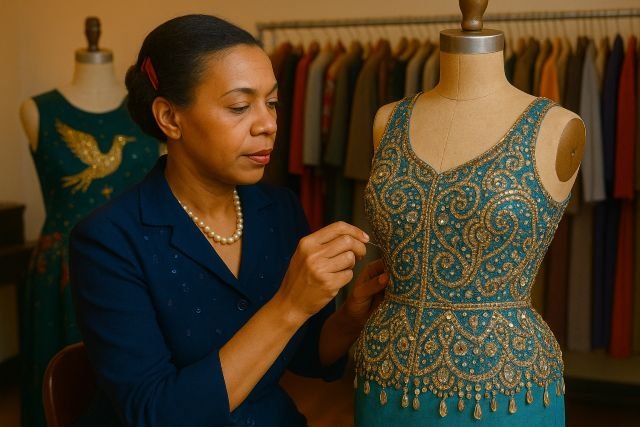
Bailey was known for her meticulous beadwork, crafting garments that shimmered with personality and symbolism. Her pieces often featured animal motifs, geometric patterns, and narrative scenes — reflecting African heritage and nature’s vitality.
| Design Element | Meaning or Influence |
|---|---|
| Animal Motifs | Strength, resilience, and spiritual symbolism |
| Geometric Patterns | African tribal art and Caribbean heritage |
| Bright Colors | Celebration of identity and emotion |
| Beaded Surfaces | Precision craftsmanship, patience, and storytelling |
2. Miniature Fashion Dolls
Bailey’s artistry extended beyond clothing. She designed miniature dolls dressed in hand-sewn haute couture, each representing characters from Harlem life or Black folklore. These dolls combined sculpture, fashion, and narrative, making her one of the first Black women to blend fashion design and visual art in this way.
3. Cultural Symbolism
Her designs expressed pride in Black femininity and African roots at a time when mainstream fashion largely ignored non-white perspectives. Ruby Bailey’s art anticipated modern movements in Afro-futurism, cultural fashion, and Black identity design.
Her garments weren’t just worn — they were lived experiences, telling stories of ancestry and aspiration.
Fashion as Resistance and Representation
At a time when racial segregation shaped every facet of American life, Ruby Bailey’s art was quietly revolutionary. She used fashion to challenge stereotypes and uplift the African-American community through beauty, creativity, and cultural affirmation.
Key Ways Ruby Bailey Empowered Through Fashion
- Redefining Beauty Standards – By showcasing dark-skinned dolls and models in her work, she celebrated Black beauty long before diversity became a trend.
- Cultural Preservation – Her use of African and Caribbean motifs kept ancestral stories alive through design.
- Economic Empowerment – Bailey often taught and mentored younger artists in Harlem, encouraging self-reliance and entrepreneurship through craft.
In a world that excluded Black women from mainstream fashion houses, Ruby Bailey created her own stage — turning Harlem into her runway.
The Legacy of Ruby Bailey’s Artwork
Bailey’s art was preserved by collectors and later rediscovered by curators decades after her death. Her pieces are now recognized as historical artifacts of Black creativity, merging fashion, sculpture, and fine art.
Institutions That Recognize Ruby Bailey’s Work
| Institution | Exhibition or Collection |
|---|---|
| Schomburg Center for Research in Black Culture (NYC) | Hosts several pieces of Ruby Bailey’s artwork and costumes |
| Smithsonian National Museum of African American History and Culture | Features her doll collection and handcrafted jewelry |
| Fashion Institute of Technology (FIT) Museum | Includes studies of Bailey’s beadwork and textile craftsmanship |
Her posthumous recognition highlights the importance of archiving African-American artistic contributions that shaped 20th-century design.
Ruby Bailey’s Influence on Modern Fashion
The ripple effects of Ruby Bailey’s style can be seen in today’s Black fashion renaissance and the broader celebration of cultural authenticity in fashion design.
Designers Inspired by Her Legacy
- Kerby Jean-Raymond (Pyer Moss): Emphasizes Black cultural narratives through couture.
- Aurora James (Brother Vellies): Draws on traditional African artistry in luxury fashion.
- Anifa Mvuemba (Hanifa): Uses digital design to express identity and empowerment.
Bailey’s blending of art, identity, and innovation paved the way for designers who now dominate global runways while celebrating African-diaspora aesthetics.
“What Ruby Bailey did in Harlem — creating with no funding, no recognition — was the blueprint for today’s Black fashion excellence.”
— Dr. Kimberly Jenkins, Parsons School of Design
Why Ruby Bailey Remains an Unsung Hero
Despite her brilliance, Ruby Bailey was largely forgotten by mainstream fashion history. Her work was rarely documented in magazines or archives during her lifetime, due in part to racial and gender discrimination in mid-century America.
Challenges She Faced
- Limited access to galleries and couture networks dominated by white designers.
- Lack of financial support or institutional backing.
- Gender biases that undervalued women’s contributions to art and fashion.
Yet, Bailey’s perseverance speaks volumes. Her artistry lives on not just in museums, but in every designer who uses fashion as a form of self-expression and resistance.
Rediscovering Ruby Bailey in the Digital Age
In recent years, social media and digital archives have revived interest in Ruby Bailey’s contributions. Art historians, bloggers, and content creators are reclaiming her narrative, sharing her story with new generations.
Online Tributes and Recognition
- The hashtag #RubyBailey has gained traction among art historians and fashion educators.
- TikTok creators spotlight her beadwork and dolls as early examples of Black fashion storytelling.
- Museums like the Schomburg Center have digitized her collections, making her work globally accessible.
This resurgence underscores how digital platforms can restore visibility to marginalized artists — finally giving Ruby Bailey the recognition she always deserved.
FAQs About Ruby Bailey
1. Who was Ruby Bailey?
Ruby Bailey was a Harlem-based African-American artist, fashion designer, and dollmaker whose innovative designs celebrated Black culture and identity during the 20th century.
2. Why is Ruby Bailey important?
She is recognized as a pioneer of African-American fashion and art, combining creativity with cultural storytelling and inspiring future generations of designers.
3. What type of art did Ruby Bailey create?
She specialized in handcrafted beadwork, miniature fashion dolls, embroidered gowns, and wearable art inspired by African and Caribbean heritage.
4. Where can I see Ruby Bailey’s work?
Her work is featured at the Schomburg Center for Research in Black Culture and the Smithsonian National Museum of African American History and Culture.
5. How did Ruby Bailey influence today’s fashion?
Modern designers draw inspiration from her emphasis on cultural pride, storytelling, and the use of traditional artistry in high fashion.
Conclusion: Ruby Bailey — A Legacy Sewn into History
Ruby Bailey was not just an artist or a designer — she was a visionary who turned fashion into a canvas of cultural pride and resilience. Through her intricate beadwork, symbolic designs, and powerful representation of Black beauty, she reshaped how art and identity could coexist.
Today, her rediscovery reminds us that true innovation often happens outside the spotlight. Ruby Bailey’s work continues to inspire artists and designers to tell their stories boldly, authentically, and unapologetically.