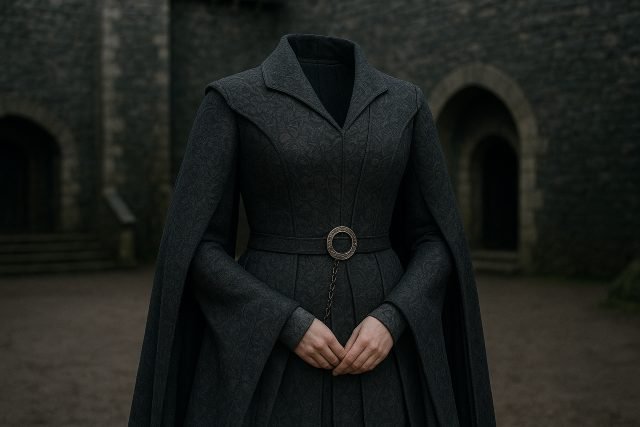
The Game of Thrones universe didn’t just captivate audiences with its political intrigue and dragons — it mesmerized with its fashion storytelling. Among the most symbolic and meticulously crafted wardrobes in television history stands the Sansa Stark costume, designed by the brilliant Michele Clapton.
Through her clothing, Sansa Stark’s journey — from a naïve Northern girl to the powerful Queen in the North — is woven into every thread, color, and silhouette. Each Sansa Stark costume is not just a piece of attire; it’s a visual narrative of resilience, identity, and empowerment.
Let’s explore how Sansa’s costumes became a masterclass in character-driven fashion design and why they remain some of the most iconic garments ever created for television.
The Philosophy Behind the Sansa Stark Costume
When Game of Thrones costume designer Michele Clapton set out to create Sansa’s wardrobe, she envisioned it as a mirror of the character’s psychological and emotional evolution.
“Sansa’s clothing tells the story that words often can’t,” Clapton said in an interview with Harper’s Bazaar. “Every fabric, stitch, and color reflects what she’s feeling and where she’s heading.”
The Sansa Stark costume design embodies the principles of character-driven fashion — clothing crafted not for glamour, but for storytelling. Her costumes chronicle her transformation from innocence to authority, seamlessly blending symbolism, practicality, and visual poetry.
Season 1–2: The Innocence of the North
At the start of Game of Thrones, Sansa Stark is introduced as a hopeful young girl from Winterfell — eager to live the fairy-tale life of a noblewoman in King’s Landing. Her costumes reflect her sheltered upbringing and naïve romanticism.
Design Breakdown
| Design Element | Symbolism |
|---|---|
| Soft Colors (pale blue, lilac, cream) | Purity and innocence |
| Light Fabrics (silk, linen) | Youthful idealism |
| Floral Embroidery | Romantic dreams of beauty and love |
| Loose Silhouettes | Vulnerability and freedom |
Her Sansa Stark costume in these seasons uses light textures and pastel tones that echo her gentleness and childlike hope — a visual foreshadowing of the innocence soon to be shattered.
Every stitch whispers her longing to be a queen, not yet realizing the cost of the crown.
Season 3–4: A Pawn in the Game
As Sansa becomes trapped in the treacherous politics of King’s Landing, her wardrobe undergoes a dramatic transformation. Her dresses become more structured, darker, and reflective of her growing loss of agency.
The King’s Landing Transformation
- The Lannister color palette of reds and golds begins to appear in her gowns.
- Tight corsets and high collars symbolize her confinement and control by others.
- Her hairstyles mimic Cersei Lannister’s — a calculated imitation of power.
This shift in the Sansa Stark costume marks her transition from innocence to survival. The clothing mirrors her adaptation to a hostile environment — elegance masking entrapment.
“Her dresses became her armor,” Clapton explained. “She learned that blending in was a form of protection.”
Season 5: The Black Feather Dress – Rebirth Through Fashion
One of the most iconic Sansa Stark costumes appears when she escapes King’s Landing and reclaims her agency — the black feather dress. This ensemble represents Sansa’s awakening, signaling a rebirth of her identity.
Symbolic Elements
- Color: Black represents rebirth, resilience, and mourning for her lost innocence.
- Feathers: Symbolize her transformation from the “little bird” of earlier seasons into a woman in control of her destiny.
- Texture: Matte fabrics and layered detail suggest strength and autonomy.
This gown marks a crucial psychological shift — from being dressed by others to choosing for herself. It’s Sansa’s declaration of selfhood.
The feathers whisper: the bird has learned to fly.
Season 6–7: The Return to Winterfell
As Sansa returns home to the North, her wardrobe reflects both heritage and newfound strength. The Sansa Stark costume design evolves into one of confidence, leadership, and rooted identity.
Design Characteristics
- Heavy wool and fur fabrics, evoking the practicality of the North.
- Dark blues, greys, and blacks, symbolizing wisdom and inner fortitude.
- Embroidered wolf motifs — the Stark sigil subtly integrated into her clothing.
- Structured silhouettes — showing discipline, command, and resilience.
| Symbolic Element | Meaning |
|---|---|
| Fur Cloaks | Connection to home and leadership |
| Dark Palette | Strength, authority, and clarity of purpose |
| Embroidery of Direwolves | Loyalty, legacy, and pride |
| Layered Structure | Inner strength and composure |
In these seasons, the Sansa Stark costume communicates that she has internalized every lesson from her trials — she is no longer adapting to others’ power; she is defining her own.
Season 8: The Queen in the North
Sansa’s coronation costume in the final episode is widely regarded as one of the greatest achievements in television costume design. It encapsulates her entire journey — visually telling the story of transformation, survival, and sovereignty.
Coronation Dress Breakdown
- Color: Silver-grey, symbolizing unity between her Northern roots and royal destiny.
- Fabric: Rich velvet and leather — blending softness and strength.
- Design Details:
- A metallic wolf head embroidered across the bodice — her house and her heart.
- Intricate leaf patterns representing the Weirwood tree of Winterfell.
- A fur-trimmed cloak — her heritage literally worn as a mantle of power.
This was not a costume of fantasy — it was a costume of victory.
As Michele Clapton said, “Every element in Sansa’s final dress told the story of how she became the woman she was always meant to be.”
Fashion as Storytelling: The Genius of the Sansa Stark Costume
The brilliance of the Sansa Stark costume design lies in its subtlety. Unlike other characters whose costumes evolve through drastic reinvention, Sansa’s wardrobe grows gradually — evolving with her psyche and story.
Core Storytelling Themes
- Transformation: Each costume reflects a distinct stage in Sansa’s personal evolution.
- Symbolism: Colors, embroidery, and fabric choices mirror emotional and political context.
- Identity: Her final costumes blend Northern and feminine aesthetics, showing harmony between power and grace.
- Empowerment: Her clothing shifts from imposed femininity to chosen authority.
This approach transformed Sansa’s wardrobe into a visual script, proving that in the hands of a great designer, costumes are not mere embellishment — they are storytelling tools.
Michele Clapton’s Design Philosophy
Michele Clapton, the award-winning costume designer behind Game of Thrones, believed that clothing should speak. Her work on the Sansa Stark costume is a masterclass in merging psychology with design.
“Every character’s clothing was built from their inner world outward,” Clapton explained to Vogue.
“Sansa’s wardrobe had to carry the scars of her story — but also the pride of her survival.”
Clapton’s approach revolved around E-E-A-T principles in fashion storytelling — Experience, Expertise, Artistry, and Truth. She built Sansa’s costumes with historical research, symbolism, and emotional accuracy.
Design Methods
- Handcrafted embroidery to reflect individual artistry.
- Natural dyes and textures that mirror medieval authenticity.
- Evolutionary silhouette mapping — tracing Sansa’s growing strength through structured tailoring.
Her mastery transformed Sansa Stark’s clothing into one of TV’s most profound costume arcs — blending fashion design with literary symbolism.
The Symbolic Palette of Sansa Stark’s Wardrobe
| Color | Meaning | Example Scene |
|---|---|---|
| Blue | Innocence and nobility | Season 1 Winterfell scenes |
| Gold & Red | Political captivity | King’s Landing period |
| Black | Rebirth and empowerment | Escape from the Lannisters |
| Grey & Silver | Wisdom and Northern identity | Final coronation scene |
By understanding color as a narrative device, Sansa Stark’s costumes visually reinforce her story arc — each hue representing her internal transformation.
Cultural Impact of the Sansa Stark Costume
The Sansa Stark costume became an iconic reference point in both the entertainment and fashion industries.
Influence on Modern Design
- Inspired runway collections by designers such as Alexander McQueen and Elie Saab.
- Sparked a trend in medieval-fantasy-inspired couture featuring embroidery and fur elements.
- Popularized the concept of “costume as character psychology” in modern film and TV design education.
Cosplay & Fan Culture
Sansa’s costumes remain fan favorites at conventions worldwide. Cosplayers meticulously replicate her black feather gown and coronation dress, symbolizing empowerment and elegance.
According to Vogue Business, “Sansa Stark costume tutorials rank among the top 10 most searched Game of Thrones cosplay terms globally.”
FAQs About the Sansa Stark Costume
1. Who designed the Sansa Stark costume?
The Game of Thrones costume designer Michele Clapton created Sansa Stark’s wardrobe, known for its deep symbolism and historical authenticity.
2. What does Sansa’s coronation gown symbolize?
It represents unity between her Northern heritage and her role as Queen — strength, leadership, and identity interwoven into one design.
3. How did Sansa’s costume evolve throughout the series?
Her wardrobe evolved from soft, delicate tones to powerful, structured garments, reflecting her psychological and political transformation.
4. What materials were used in Sansa’s costumes?
Designers used authentic materials such as velvet, fur, linen, silk, and hand-embroidered fabrics inspired by medieval Northern European fashion.
5. Why is the Sansa Stark costume significant in TV fashion history?
It’s considered a landmark in character-driven costume design, where fashion serves as a narrative tool, not mere decoration.
Conclusion: The Sansa Stark Costume — Power, Purpose, and Precision
The Sansa Stark costume is more than a wardrobe — it’s a storytelling masterpiece. Through deliberate craftsmanship, symbolism, and evolution, Michele Clapton transformed fabric into a narrative canvas, showing that fashion can be as powerful as dialogue.
Each dress traces Sansa’s rise — from silks of submission to the structured armor of sovereignty. Her costumes are a visual testament to her resilience, intellect, and grace.