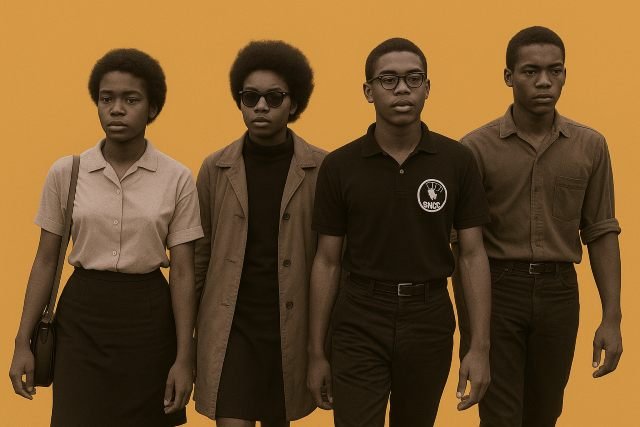
In the 1960s, during one of the most transformative eras in American history, fashion wasn’t just about fabric and trends — it was about freedom, identity, and defiance. Among the many facets of the Civil Rights era, one stood out for its subtle yet powerful influence: SNCC Civil Rights Movement fashion.
The Student Nonviolent Coordinating Committee (SNCC) not only fought for racial justice but also used clothing as a strategic and cultural statement. The fashion of the SNCC era reflected dignity, unity, and empowerment — a visual assertion that Black Americans demanded equality and respect.
The Birth of SNCC and Its Role in the Civil Rights Movement
Founded in 1960 by young activists like John Lewis, Diane Nash, and Ella Baker, the SNCC became one of the most influential organizations of the Civil Rights Movement. While its focus was on direct action — sit-ins, freedom rides, and voter registration — its members also understood the power of presentation.
Why Fashion Mattered
The SNCC believed that how activists looked would shape how they were perceived. In a deeply segregated America, where stereotypes painted African Americans as “uneducated” or “disorderly,” dress became an instrument of respectability, resistance, and redefinition.
“Clothing became armor — symbolic protection in a world where even dignity was denied.”
— Dr. Tanisha Ford, historian and author of Liberated Threads
The Symbolism of SNCC Civil Rights Movement Fashion
Clothing in the SNCC movement wasn’t random — it was deliberate and coded. The style represented resistance, professionalism, and unity among young activists.
Common Fashion Elements
| Clothing Item | Symbolic Meaning |
|---|---|
| Pressed shirts & blouses | Discipline, respectability, and seriousness of purpose |
| Dark trousers & skirts | Practicality for marches and protests |
| Denim overalls & work shirts | Solidarity with rural Black laborers |
| Natural hair (Afros, braids) | Celebration of Black identity and rejection of Eurocentric norms |
| Pins & buttons (e.g., SNCC logo) | Public declaration of loyalty to the cause |
How SNCC Used Fashion as a Political Strategy
1. Respectability Politics and Strategic Dressing
In early SNCC campaigns, especially during sit-ins and voter drives in the South, activists adopted “Sunday best” fashion — collared shirts, dresses, suits, and ties.
This approach was rooted in the “politics of respectability” — a strategy to counter racist stereotypes by projecting refinement and moral strength. Activists knew their images would be broadcast nationally; therefore, appearing polished reinforced the legitimacy of their cause.
2. Denim as the Uniform of the Movement
By the mid-1960s, SNCC fashion evolved. Activists began wearing denim overalls, work shirts, and jeans — clothing once associated with Black sharecroppers. This shift symbolized solidarity with the working class and rejection of elitist ideals.
“Denim became our badge of honor,” recalled SNCC activist Charles Cobb Jr. “It said, we are with the people, not above them.”
3. Gender and Empowerment
For women in SNCC — figures like Fannie Lou Hamer and Diane Nash — fashion was a balancing act between traditional femininity and active resistance. Many wore simple cotton dresses and scarves, blending practicality with poise. Their style rejected objectification while asserting strength and leadership in a male-dominated society.
The Message Behind the Style: Dignity in Defiance
The SNCC Civil Rights Movement fashion reflected a profound message: you can resist oppression without losing grace or identity.
Activists understood that their appearance challenged more than segregation — it contested centuries of racist propaganda. Their modest, neat attire told the world, “We are equal citizens. We are intelligent. We are human.”
Even under the threat of violence, activists maintained composure in dress and demeanor — turning clothing into a silent protest against systemic humiliation.
Fashion as Cultural Identity and Empowerment
Embracing Black Identity
As the Civil Rights Movement merged with the Black Power Movement, fashion took on a bolder tone. Afros, African prints, and dashikis began to replace Western attire. This evolution represented a reclamation of African heritage and self-love.
Key Shifts in SNCC Style
| Era | Fashion Trend | Meaning |
|---|---|---|
| Early 1960s | Suits, dresses, polished shoes | Respectability, professionalism |
| Mid-1960s | Denim, workwear | Solidarity with rural South, unity |
| Late 1960s | Afros, African fabrics, natural beauty | Black pride, cultural empowerment |
This shift symbolized a generational awakening — a visual declaration of “Black is Beautiful.”
Notable Figures and Their Influence on SNCC Fashion
1. Diane Nash
Nash embodied grace and discipline. Her modest dresses and calm demeanor became visual representations of peaceful protest. She demonstrated that women could lead with both style and substance.
2. John Lewis
Often seen in neatly pressed shirts and ties during marches, Lewis reflected the SNCC’s emphasis on dignity and respect. His presentation made him a powerful symbol of peaceful resistance.
3. Fannie Lou Hamer
Her humble cotton dresses and headscarves became synonymous with grassroots activism. Hamer’s wardrobe symbolized strength, resilience, and connection to working-class roots.
4. Stokely Carmichael (Kwame Ture)
As SNCC evolved toward the Black Power ideology, Carmichael’s style shifted to African-inspired attire, symbolizing liberation and solidarity with global struggles for independence.
The Role of Women in SNCC Civil Rights Movement Fashion
Women were at the forefront of SNCC’s visual identity. They carefully balanced practicality and presentation in environments that demanded resilience.
How Women Redefined Activist Fashion
- Function over form: Clothing had to withstand marches, jail time, and fieldwork.
- Modesty with strength: Dresses and skirts were simple yet dignified.
- Natural hairstyles: Rejection of Eurocentric beauty standards empowered Black women.
“Our fashion was our freedom. Every Afro, every cotton dress said, ‘We belong to ourselves.’”
— Former SNCC member Joyce Ladner
SNCC Fashion’s Influence on Modern Movements
The legacy of SNCC Civil Rights Movement fashion continues to inspire modern activism — from the Black Lives Matter movement to student-led protests worldwide.
Modern Parallels
- Black Lives Matter: T-shirts, hoodies, and protest gear with political slogans echo SNCC’s message of unity through fashion.
- Sustainable Fashion: The movement’s embrace of simplicity and reuse mirrors SNCC’s anti-materialist ethos.
- Celebrity Activism: Artists like Beyoncé and Kendrick Lamar often channel SNCC-inspired visuals in performances celebrating Black pride.
Today, the SNCC aesthetic lives on through symbolic minimalism — using clothing to represent consciousness, equality, and resilience.
SNCC Fashion and Media Representation
Photography played a vital role in shaping the perception of the Civil Rights Movement. Images of well-dressed, composed young activists facing violence with dignity became enduring symbols of courage.
Publications like Jet, Ebony, and Life Magazine captured SNCC members standing tall in clean shirts and dresses, rewriting the visual language of Black America.
These photos helped the world see the humanity, organization, and purpose behind the movement — something that fashion quietly but powerfully communicated.
The Continuing Legacy: SNCC Civil Rights Movement Fashion Today
Modern designers and historians often draw inspiration from SNCC-era aesthetics. The minimalist tailoring, natural textures, and Afrocentric influences are evident in collections from brands like Pyer Moss, Brother Vellies, and Telfar.
Fashion schools now include SNCC as a case study on how clothing can function as a form of protest art — bridging the gap between activism and aesthetics.
“SNCC turned fashion into language,” says fashion historian Kimberly Jenkins. “It taught future generations that clothing can confront power.”
FAQs: Understanding SNCC Civil Rights Movement Fashion
1. What was SNCC Civil Rights Movement fashion?
It was the style adopted by members of the Student Nonviolent Coordinating Committee during the 1960s, characterized by modest, practical, and symbolic clothing representing dignity, unity, and resistance.
2. Why did SNCC activists dress formally?
They dressed formally to project professionalism and counter negative stereotypes. Fashion became a tool of nonviolent resistance and visual communication.
3. What did denim symbolize in SNCC fashion?
Denim represented solidarity with the working class, especially rural Black communities, and a rejection of elitism.
4. How did SNCC fashion empower women?
It allowed women to assert control over their appearance, blending functionality with pride, and redefining traditional notions of femininity.
5. How does SNCC fashion influence modern movements?
Its spirit lives on in protest fashion, minimalism, and social-justice-inspired design that values authenticity and cultural pride.
Conclusion: The Legacy of SNCC Civil Rights Movement Fashion
The SNCC Civil Rights Movement fashion stands as one of history’s most profound examples of style as resistance. Every neatly pressed shirt, every denim jacket, and every Afro carried a message of power, dignity, and unity.
What began as a political necessity evolved into a visual language of empowerment — proving that fashion isn’t just about appearance; it’s about identity, purpose, and revolution.