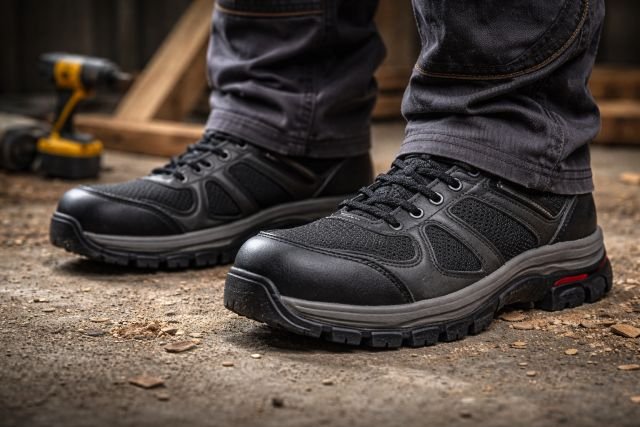
Steel toe cap trainers are quickly becoming a favorite for workers who need toe protection without the heavy feel of traditional safety boots. They combine the protective strength of reinforced footwear with the comfort and flexibility of athletic trainers, making them ideal for warehouse staff, logistics teams, engineers, and tradespeople who move constantly throughout the day.
The biggest advantage is that steel toe cap trainers offer certified protection while staying lightweight and wearable for long shifts. Under standards like EN ISO 20345, certified safety footwear must meet strict requirements such as impact resistance up to 200 joules and compression resistance up to 15 kN, ensuring that the toe protection is more than just a design feature — it’s tested safety.
In this guide, you’ll learn exactly what steel toe cap trainers are, why they’re often the best choice for everyday workwear, what certifications to look for, how they compare to boots and composite toe alternatives, and how to choose the right pair for your job.
What Are Steel Toe Cap Trainers?
Steel toe cap trainers are safety trainers that contain a steel-reinforced toe area designed to protect your feet from impact and compression injuries. They’re built to the same basic safety purpose as steel toe boots but feel more like sports shoes. Most are lower-cut, lighter, and designed for flexibility, which makes them a strong option for indoor and mixed-surface workplaces.
While safety boots are often preferred for outdoor construction work, wet ground, and extreme conditions, steel toe cap trainers are often better suited for fast-paced environments where comfort and mobility matter most.
Why Steel Toe Cap Trainers Are the Best Choice for Everyday Workwear
The biggest reason steel toe cap trainers are so popular is comfort. Many workers spend eight to twelve hours on hard flooring, walking thousands of steps. Traditional boots can feel stiff and tiring in these conditions, especially for indoor roles. Steel toe trainers often include cushioning systems similar to athletic footwear, which reduces fatigue and improves daily comfort.
They are also easier to move in. If your job involves frequent walking, climbing stairs, bending, lifting, or working in tight spaces, a lower-profile trainer design supports natural movement better than many heavy boots. This matters not just for comfort but also for productivity, because better mobility can reduce strain and improve efficiency.
Slip resistance is another major reason steel toe trainers are a smart everyday choice. Slips and falls remain one of the most common workplace hazards. The CDC/NIOSH highlights the serious burden of slips, trips, and falls and notes that slip-resistant footwear can be a valuable prevention tool in workplace safety strategies.
U.S. BLS data also shows that falls, slips, and trips contributed to 885 fatal workplace injuries in 2023, which is a clear reminder that traction and stable footing are not optional in many workplaces.
Steel Toe Cap Trainers Safety Standards
One of the most important buying factors is certification. If steel toe cap trainers are truly safety footwear, they will carry standards markings that verify impact and compression testing.
EN ISO 20345
EN ISO 20345 is the main safety footwear standard used across the UK and EU and recognized widely elsewhere. It confirms that footwear meets minimum performance requirements, including a protective toe cap tested for impact resistance up to 200 joules and compression resistance up to 15 kN.
If you see markings like SB, S1, S1P, S2, or S3, these indicate increasing levels of protection. For example, S1P typically includes puncture-resistant midsoles, which are important if you work around sharp debris like nails or scrap metal.
ASTM F2413 (United States)
In the U.S., protective footwear commonly uses ASTM standards. ASTM confirms that these standards replaced ANSI Z41, which was withdrawn.
If your workplace still references ANSI Z41, that’s usually legacy terminology, and modern compliance is generally aligned with ASTM F2413.
Steel Toe Cap Trainers vs Steel Toe Boots: Which Should You Choose?
Steel toe boots and steel toe trainers can both provide certified toe protection, but they serve different needs. Steel toe cap trainers are generally the better option for indoor work, light-to-moderate risk environments, and jobs that require long hours of walking. They’re often lighter, more breathable, and easier to wear all day without fatigue.
Steel toe boots tend to be better for harsh outdoor environments, heavy construction, muddy or wet ground, and jobs requiring additional ankle support. If you regularly work in deep water, extreme weather, or environments where ankle injuries are more likely, boots might still be the best choice.
For most everyday warehouse and industrial workers, steel toe cap trainers offer the best balance of safety and comfort.
Steel Toe Cap Trainers vs Composite Toe Trainers
Steel toe and composite toe trainers both protect the foot, but they differ in weight, temperature feel, and suitability for certain workplaces.
| Feature | Steel Toe Cap Trainers | Composite Toe Trainers |
|---|---|---|
| Weight | Slightly heavier | Usually lighter |
| Temperature feel | Can feel colder/hotter | More temperature neutral |
| Metal detection | Can trigger detectors | Usually detector-friendly |
| Durability | Very strong | Strong, varies by material |
| Price | Often more affordable | Often slightly higher |
Steel toe cap trainers are a strong option if you want proven protection and value. Composite toe trainers are often better for workers passing metal detectors regularly or those prioritizing the lightest possible option.
Where Steel Toe Cap Trainers Work Best
Steel toe cap trainers are especially effective in warehouses, manufacturing facilities, logistics hubs, workshops, and maintenance environments. They’re also popular among drivers and delivery workers who need toe protection without bulky boots.
They may not be ideal for high-risk construction sites with heavy water exposure, welding environments unless rated appropriately, or outdoor conditions requiring high ankle support. The key is matching the shoe rating and build to the hazards of your job.
What Makes a Great Pair of Steel Toe Cap Trainers?
A good pair of steel toe cap trainers should feel comfortable within the first few days while staying supportive and protective throughout long shifts. The most important performance factors include slip resistance, cushioning, breathability, and durability in high-wear areas such as the toe scuff zone and heel.
If you work on hard floors, look for energy-absorbing heel design and cushioned midsoles to reduce strain on knees and lower back. If your workplace includes sharp debris, choose a model rated for puncture resistance. If floors are often wet or oily, slip resistance becomes a priority because falls are a major injury risk in many workplaces.
How to Choose the Best Steel Toe Cap Trainers
Start by identifying your main workplace hazards. If you need protection only from toe injuries and slips, a lightweight S1-rated trainer might be enough. If you work around sharp objects, choose S1P or S3 for puncture resistance. If water resistance matters, choose S2 or S3.
Always check the label inside the shoe or the manufacturer’s specifications. Look for EN ISO 20345 markings if you’re in the UK/EU or ASTM markings if you’re in the U.S. Certification ensures that toe protection is tested and verified, not just claimed.
Fit matters more than people realize. Steel toe cap trainers should provide enough space for toes to move naturally without touching the toe cap while walking downhill. A poor fit can cause pressure, blisters, and toe bruising, even if the shoe is technically “the right size.” If your toes touch the steel cap frequently, the shoe is too small or the toe box shape is wrong for your foot.
Real-World Work Scenarios: Why Trainers Often Beat Boots
Imagine a warehouse picker walking 18,000 steps a day on concrete. Heavy boots may provide protection, but they also add fatigue and discomfort. Steel toe cap trainers with cushioned midsoles and energy absorption can deliver safety with much less strain.
Now consider a delivery hub where floors are frequently wet. Workers are moving fast, carrying packages, and stepping in and out of vehicles. Slip-resistant steel toe trainers can improve stability and reduce slip risk. This aligns with safety research highlighting the importance of slip-resistant footwear in preventing injuries related to slips and falls.
How to Maintain Steel Toe Cap Trainers for Longer Lifespan
Steel toe cap trainers last longer when cared for consistently. Keep them clean by wiping uppers and removing debris from outsole grooves. Allow them to dry properly if exposed to moisture, and rotate pairs if possible when working long shifts. Replace insoles regularly if cushioning drops, and consider replacement when outsole grip wears down, because slip resistance reduces gradually over time.
A trainer can still “look fine” while losing grip and shock absorption. Comfort and safety are performance features, not just appearance.
FAQs About Steel Toe Cap Trainers
What are steel toe cap trainers?
Steel toe cap trainers are safety trainers with a steel-reinforced toe designed to protect against impact and compression injuries while offering trainer-style comfort and mobility.
Are steel toe cap trainers as safe as safety boots?
Yes, they can be equally safe if they meet the same certified standards such as EN ISO 20345 or ASTM F2413. The main difference is that boots often provide more ankle support and stronger protection against extreme outdoor conditions.
Do steel toe cap trainers meet EN ISO 20345?
Many do. EN ISO 20345 requires protective footwear toe caps to meet impact resistance up to 200J and compression resistance up to 15 kN. Certified steel toe cap trainers will show this marking on the label or product specification.
Are steel toe trainers good for standing all day?
Yes, especially models designed with cushioned midsoles, energy absorption, and supportive insoles. They are often more comfortable than stiff boots for long shifts on hard floors.
Can steel toe cap trainers reduce slips?
They can, depending on outsole design and slip testing. Many workplaces recommend slip-resistant footwear because slips and falls are a major injury risk, and research supports traction-focused footwear as part of prevention strategies.
Conclusion: Steel Toe Cap Trainers Are the Smart Everyday Workwear Upgrade
Steel toe cap trainers have earned their place as one of the best options for everyday workwear because they combine certified protection with the comfort and mobility of trainers. When chosen with the right safety rating and the right features — especially slip resistance and cushioning — they help workers stay compliant, reduce fatigue, and move confidently throughout long shifts.
In workplaces where slips and falls continue to cause serious injury and even fatalities, choosing footwear that supports both toe protection and traction is a practical safety decision, not just a comfort upgrade. If you want work footwear that protects like safety shoes but feels like everyday trainers, steel toe cap trainers are a strong and modern solution.