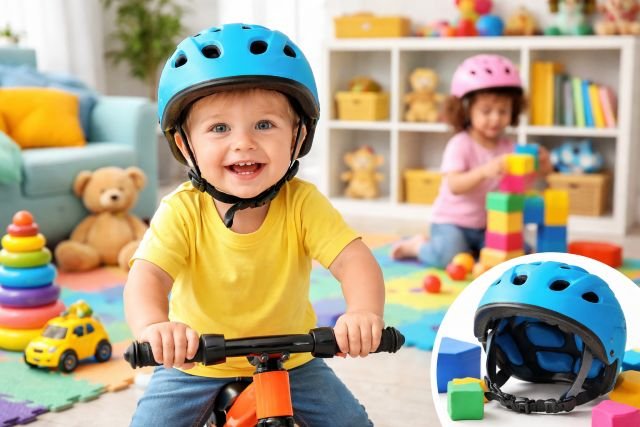
Toddlers learn about the world through movement. Crawling, standing, walking, and climbing are all essential parts of early development, but they also come with frequent falls. A toddler helmet is designed to reduce the risk of head injuries during these critical learning stages. Used correctly, it provides gentle protection while allowing children to explore safely and confidently.
In this comprehensive guide, you will learn what a toddler helmet is, when it is helpful, how to choose the right one, and what safety experts say about its use. This article is written to help parents make informed, confident decisions without fear-based messaging or unnecessary complexity.
What Is a Toddler Helmet?
A toddler helmet is a lightweight, soft head-protection accessory created specifically for babies and toddlers, usually between six months and three years of age. Unlike hard helmets used for biking or sports, a toddler helmet is meant for low-impact protection, primarily indoors or during closely supervised play.
These helmets are typically made with soft foam padding covered by breathable fabric. They are designed to cushion the head during minor falls rather than withstand high-speed impacts. Because toddlers have proportionally larger heads and less developed balance, head-first falls are common, making this type of protection especially relevant.
A toddler helmet should always be viewed as a temporary support tool rather than a permanent accessory.
Why Head Protection Is Important for Toddlers
Head injuries are one of the most common injury types among young children. According to the Centers for Disease Control and Prevention, falls are the leading cause of non-fatal injuries in children under four years old. During early development, toddlers lack the reflexes needed to protect their heads when they lose balance.
Hard flooring, furniture edges, and slippery surfaces increase the likelihood of head bumps during everyday activities. A toddler helmet can help absorb shock and reduce the severity of these impacts. While it does not eliminate risk, it adds a layer of protection during a vulnerable stage of growth.
When a Toddler Helmet Is Most Useful
A toddler helmet is particularly helpful during transitional developmental phases. Children who are learning to walk often experience backward falls because they have not yet developed protective reflexes. Helmets are also commonly recommended for toddlers with balance difficulties, low muscle tone, or medical conditions that increase fall risk.
Some parents choose to use a toddler helmet during post-surgery recovery periods or during high-energy indoor play on hard surfaces. In these situations, the helmet acts as a temporary safeguard rather than a daily requirement.
It is important to note that toddler helmets should not be worn during sleep or used as a replacement for supervision. Their purpose is to support safety, not replace attentive caregiving.
Types of Toddler Helmets
Most toddler helmets fall into two broad categories. Soft protective helmets are the most common and are intended for everyday play, crawling, and early walking. These are lightweight, flexible, and designed to be comfortable for extended wear.
Medical or special-needs helmets are sometimes recommended by pediatricians or specialists. These offer more structured padding and are often custom-fitted for children with specific health conditions. These helmets may look similar to soft helmets but are designed with higher-impact protection in mind.
Outdoor sports helmets, such as those used for balance bikes or scooters, are not the same as toddler helmets. These must meet certified safety standards and should only be used for their intended activities.
How to Choose the Right Toddler Helmet
Choosing the right toddler helmet begins with fit. A helmet should sit snugly on the head without pressing tightly on the forehead or temples. Adjustable straps help keep the helmet in place during movement, while breathable materials prevent overheating.
Parents should measure their toddler’s head circumference before purchasing rather than relying on age recommendations alone. Materials should be non-toxic, soft, and easy to clean, as toddlers often sweat or drool while playing.
Comfort is essential. If a helmet causes irritation or discomfort, a toddler is unlikely to tolerate wearing it, which defeats its purpose.
Are Toddler Helmets Safe?
When used properly, toddler helmets are generally considered safe for short periods of supervised use. Pediatric injury prevention experts agree that soft helmets can help reduce the severity of minor head injuries during low-risk activities.
The American Academy of Pediatrics emphasizes that injury prevention should focus on safe environments and supervision first, with protective gear used as an added precaution when needed.
Parents should regularly inspect helmets for wear, ensure proper fit, and discontinue use once the child’s balance improves.
Addressing Common Concerns About Toddler Helmets
Some parents worry that using a toddler helmet may delay motor development. Current research does not support this concern when helmets are used appropriately and temporarily. Toddlers still learn balance through movement, and helmets do not interfere with that process.
Another common concern is that helmets may encourage risky behavior. Toddlers do not yet have the cognitive ability to associate helmets with invulnerability, so this risk compensation does not apply at this age.
It is also a misconception that only clumsy toddlers need helmets. Falls are a normal part of development for all toddlers, regardless of coordination level.
Real-World Example of Toddler Helmet Use
Consider a 15-month-old toddler learning to walk on tile flooring. Frequent backward falls caused repeated head bumps, leading to parental anxiety and interrupted playtime. After introducing a soft toddler helmet during active play, the child continued exploring freely while experiencing fewer painful impacts. As balance improved over time, helmet use was gradually reduced and eventually discontinued.
This type of short-term, situational use reflects how toddler helmets are most effective.
How Long Should a Toddler Wear a Helmet?
A toddler helmet is not meant for long-term daily use. Most families use it for a few weeks or months during a specific developmental phase. As balance, coordination, and confidence improve, the need for head protection decreases naturally.
Regular reassessment is important. If a toddler no longer falls frequently, continued helmet use may no longer be necessary.
Care and Maintenance of a Toddler Helmet
Proper care ensures that a toddler helmet remains hygienic and effective. Most soft helmets can be hand washed or machine washed on a gentle cycle. They should always be air-dried fully before reuse.
Parents should inspect padding regularly and replace the helmet if the foam becomes compressed or damaged, as worn padding loses its shock-absorbing ability.
Frequently Asked Questions About Toddler Helmets
A toddler helmet does not prevent all head injuries, but it can reduce the severity of minor impacts during everyday falls. Toddlers should never sleep while wearing a helmet due to overheating and safety risks. Soft toddler helmets are not regulated like bike helmets, but many are designed following pediatric safety recommendations for low-impact protection.
Conclusion: Is a Toddler Helmet the Right Choice?
A toddler helmet can be a practical and reassuring safety solution during early walking and active play stages. While it is not essential for every child, it can be especially beneficial for toddlers who fall frequently, have medical needs, or are navigating hard indoor surfaces.
When used temporarily, correctly, and alongside close supervision, a toddler helmet supports safe exploration without limiting development. For many families, it provides peace of mind during one of the most exciting and unpredictable stages of childhood growth.