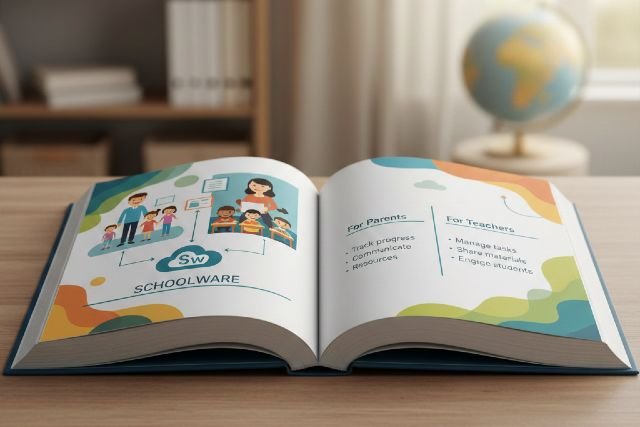
Schoolware is a digital system designed to connect schools, parents, teachers, and students through one platform. It helps manage school communication, academic tracking, attendance, homework updates, evaluations, schedules, and administrative reporting. For parents, schoolware works like a central dashboard where they can quickly view important school information without relying on paper notices or waiting for meetings. For teachers, it provides tools to record attendance, share assignments, publish feedback, and communicate with guardians in a structured way. Many schoolware platforms offer both web and mobile access to make school updates more convenient and consistent.
Schoolware is increasingly adopted because it reduces gaps between school and home, improves transparency, and makes education management smoother for everyone involved.
What Does the Term Schoolware Mean?
The term schoolware generally refers to a type of school management software that supports both academic and administrative functions. It is designed to organize and centralize student-related information such as attendance, grades, messages, lesson updates, and school announcements. Unlike systems that only focus on delivering lessons, schoolware often includes broader school operations such as timetables, parent communication, reporting, and sometimes even fee or transport management depending on the provider. In short, schoolware is a complete digital environment for school-life management, used daily by parents and teachers to stay aligned.
Schoolware vs LMS vs SIS: Understanding the Differences
Schoolware is often confused with other education software, especially learning management systems and student information systems. A learning management system mainly focuses on learning content, such as assignments, lesson material, quizzes, and online classroom interaction. A student information system is usually more administrative and focuses on records, enrollment, and official reporting. Schoolware frequently combines parts of both systems, offering communication tools for families, tracking tools for teachers, and management tools for administrators. That is why many people refer to schoolware as an all-in-one system rather than a single-purpose platform.
Why Schoolware Has Become Essential in Modern Education
Schoolware has become more important because schools are handling larger student populations, increased reporting requirements, and higher expectations from parents. Parents want fast updates about attendance, homework, and progress, while teachers need efficient ways to share information and keep communication documented. Traditional methods like student diaries, paper notices, and phone calls can be slow, inconsistent, and easily missed. Schoolware solves this by centralizing school activity and making information instantly accessible.
The growth of digital education technology worldwide also supports the rise of schoolware systems. Market research shows continued investment and growth in education software, reflecting how digital platforms are becoming essential tools for modern schooling.
Core Features of Schoolware for Parents and Teachers
Most schoolware platforms include a set of features that support daily school life. Attendance tracking is one of the most used functions because it helps teachers mark students present or absent quickly while allowing parents to see updates in real time. Many systems also offer messaging tools that allow teachers to send announcements or direct messages to parents. This improves communication and reduces confusion because messages remain in one place instead of being scattered across phone calls or personal messaging apps.
Schoolware often includes a calendar and timetable system that lets parents and students view class schedules, exam dates, and school events. Homework and classwork tracking is another common feature, allowing teachers to post assignments and parents to monitor completion. Evaluation and grade reporting features help parents understand student performance and track improvement over time. In more advanced platforms, schools may also use fee modules, report generation tools, transport tracking, and analytics dashboards for administrative decision-making.
How Parents Benefit from Schoolware
Parents benefit most from schoolware because it gives them visibility and control over school-related information. It allows parents to see whether their child attended school, what homework was assigned, and what messages were sent by teachers or administration. This reduces the need for repeated follow-ups and improves parent involvement. When parents stay informed, they can support learning at home more effectively, especially when children forget to share important updates.
Schoolware also reduces stress. Instead of worrying about missed notices or unclear schedules, parents can check the app or portal any time and confirm what is happening. Over time, this improves trust between families and schools because communication becomes consistent and transparent.
How Teachers Benefit from Schoolware
For teachers, schoolware reduces repetitive tasks and improves organization. Teachers can mark attendance quickly, share homework in one place, and communicate with parents without giving out personal phone numbers. Most importantly, schoolware keeps communication documented, which helps reduce misunderstandings and provides clarity if issues arise later.
Teachers also benefit from structured reporting. Many platforms generate performance summaries, evaluation reports, and attendance records automatically. This saves time and helps teachers focus more on instruction rather than paperwork. When the system is used consistently across the school, it also creates uniform expectations for students and parents.
How Students Benefit from Schoolware
Students benefit because schoolware helps them become more organized and accountable. It provides clarity on homework deadlines, schedules, and school messages. Many platforms include reminders or to-do lists that reduce the chance of missing assignments. Students who regularly check schoolware develop better self-management habits, which improves academic responsibility over time.
Schoolware also supports student motivation. When evaluations, feedback, and progress are visible, students better understand their strengths and areas for improvement. This often helps them set clearer goals and track progress across the term.
How to Use Schoolware Effectively: Practical Tips
Schoolware is only helpful if it is used consistently. Parents should make a habit of checking schoolware briefly each day, even if only for a few minutes. This prevents missed updates and makes communication smoother. It is also helpful for parents to enable notifications for attendance changes or teacher messages so important updates are not missed. When messaging teachers, parents should keep communication polite, specific, and focused on the child’s learning needs.
Teachers can use schoolware effectively by keeping updates consistent and predictable. When homework is posted at a regular time and messages are clear, parents learn what to expect and communication becomes easier. Teachers should also avoid overloading families with unnecessary notifications. Short, structured updates usually work best, especially for mobile users.
Data Privacy and Safety: What Parents Should Know
Because schoolware stores student-related information, privacy and safety are important topics. Schoolware systems may store names, grades, attendance, teacher feedback, and communication records. Parents should ask schools who can access student data, whether the system is encrypted, and how long records are stored. It is also important to review how the platform handles login security and whether it follows student data protection rules in the country where the school operates.
Parents should also understand that any app-based platform can request device permissions. Schools should select reputable providers and ensure that the platform’s privacy policy aligns with best practice data security standards.
Common Problems with Schoolware and How to Solve Them
One common challenge is low adoption. Some parents may not use schoolware regularly because they do not understand it or are not comfortable with technology. Schools can solve this by offering simple onboarding sessions, short tutorial videos, and support contacts for troubleshooting. Another challenge is teacher workload. If teachers are expected to post too frequently or update too many modules, they may feel overwhelmed. Schools should create a clear process and minimum expectations so teachers can use the platform efficiently.
Another common issue is notification overload. If parents receive too many messages, they may start ignoring alerts. Schools should keep broadcast messages limited to important updates and teach parents how to adjust settings. Finally, technical issues such as login errors or slow systems can reduce trust. A dedicated support person and a clear help system can solve most of these issues quickly.
Schoolware in Action: Realistic Examples
A school may use schoolware to improve attendance by sending parents instant notifications when students arrive late or miss a class. This encourages faster parent response and reduces attendance problems over time. Another school may use schoolware to increase homework completion by posting assignments daily and allowing parents to view missed tasks. This improves accountability and reduces last-minute confusion before tests.
Some schools use schoolware to reduce communication conflicts by documenting messages and keeping updates centralized. When communication becomes structured and visible, misunderstandings drop and parent-school trust improves.
How to Choose the Right Schoolware Platform
If a school is choosing a schoolware system, it should focus on ease of use first. A platform is only successful if parents and teachers can use it without confusion. It should support mobile and web access, provide secure messaging, support attendance and evaluation tracking, and offer role-based permissions. Schools should also consider training support, customer service quality, language options, and integrations with existing systems. A good schoolware platform is not only feature-rich but also simple enough to encourage daily adoption.
FAQs About Schoolware
What is schoolware used for?
Schoolware is used to manage school communication, attendance tracking, homework updates, grades, evaluations, schedules, and reporting in one platform for parents, teachers, and students.
Is schoolware the same as an LMS?
Schoolware is not always the same as an LMS. An LMS focuses mainly on learning content and assignments, while schoolware usually includes broader school management features such as attendance, messaging, timetables, evaluations, and administrative reporting.
Can parents access schoolware at any time?
Yes, most schoolware systems allow parents to access information through a mobile app or website, using login credentials provided by the school.
Is schoolware safe?
Schoolware platforms are generally designed with access controls, but safety depends on the provider and the school’s privacy policies. Parents should ask about encryption, data access rules, and record storage policies.
How do teachers benefit from schoolware?
Teachers benefit by saving time on attendance and reporting, sharing homework efficiently, and communicating with parents through a structured and documented system.
Conclusion: Why Schoolware Matters for Schools and Families
Schoolware is a modern solution that helps schools operate more efficiently while strengthening communication between parents and teachers. It improves transparency by giving families access to attendance updates, homework tracking, schedules, evaluations, and school announcements. Teachers benefit from reduced paperwork, structured reporting, and better communication tools, while students gain organization and accountability.
When used consistently, schoolware becomes more than a digital tool. It becomes a support system that improves learning outcomes, reduces confusion, and strengthens the relationship between home and school. For parents and teachers who want clarity, consistency, and better student success, schoolware is an essential part of modern education.