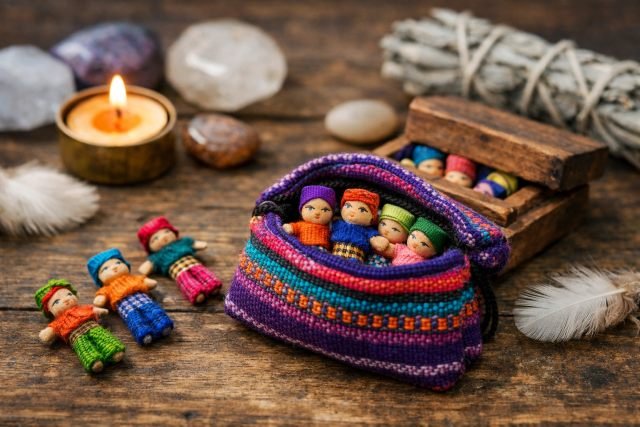
Worry dolls are small yet deeply meaningful figures that people have relied on for generations to ease anxiety and quiet the mind. Rooted in Guatemalan folklore, worry dolls are believed to listen to human fears and relieve emotional stress when worries are shared with them. Even today, they continue to be used as tools for peace of mind, better sleep, and emotional comfort.
This article explores worry dolls traditions in depth, explains why people still use worry dolls for peace of mind, and looks at both cultural and psychological reasons behind their lasting appeal.
What Are Worry Dolls?
Worry dolls are tiny handcrafted figures traditionally used to symbolically take away worries and anxieties. A person tells the doll what is troubling them and places it under their pillow before sleeping. According to tradition, the worry doll takes on the burden of the worry, allowing the person to rest peacefully.
Although simple in appearance, worry dolls carry powerful emotional symbolism that helps people externalize stress and feel supported.
The Cultural Origins of Worry Dolls
Mayan and Guatemalan Roots
Worry dolls originate from Guatemala and are closely linked to ancient Mayan traditions. In Guatemalan folklore, parents gave worry dolls to children who were afraid, anxious, or unable to sleep. The belief was that the dolls would worry in place of the child throughout the night.
Over time, this tradition spread beyond Guatemala and became recognized worldwide as a cultural symbol of comfort and emotional healing.
Traditional Craftsmanship
Authentic worry dolls are handmade using wire or wood for the body and wrapped in colorful threads and fabric. Each doll is unique, reflecting the artisan’s skill and the vibrant cultural heritage of Guatemala. These dolls are often sold in small sets, traditionally representing different worries.
Cultural institutions such as the Smithsonian recognize worry dolls as an example of symbolic folk practices used for emotional well-being.
Why People Use Worry Dolls for Peace of Mind
People use worry dolls because they provide emotional relief through symbolism. When worries are spoken aloud and transferred to an object, the mind experiences a sense of release. This process reduces mental overload and helps calm racing thoughts.
Psychologists refer to this as symbolic coping, where emotional stress is managed by assigning it to a safe external object. According to the American Psychological Association, consistent stress-relief rituals can lower anxiety levels and improve sleep quality. Worry dolls naturally fit into this category.
The Psychology Behind Worry Dolls
From a psychological perspective, worry dolls work through cognitive offloading. When the brain believes a concern has been “handled,” it no longer feels the need to actively process it. This can reduce nighttime rumination and stress-induced insomnia.
Using worry dolls also encourages mindfulness. The ritual requires focusing on one worry at a time, acknowledging it, and then intentionally letting it go. This mirrors techniques used in mindfulness-based stress reduction programs and cognitive behavioral therapy.
How to Use Worry Dolls Properly
Traditionally, a person holds a worry doll, shares one specific worry with it, and places it under their pillow before sleep. The act is completed with a moment of gratitude or calm intention. In folklore, each doll is responsible for one worry only.
In modern life, many people adapt this ritual. Adults may use worry dolls during meditation sessions, keep them on a bedside table, or combine them with journaling and breathing exercises. While the method may vary, the purpose remains the same: emotional release and peace of mind.
Worry Dolls and Children’s Emotional Well-Being
Worry dolls are especially helpful for children because they offer a simple way to express feelings. Children who struggle to articulate fear or anxiety often find comfort in telling their worries to a doll. This reduces emotional suppression and encourages healthy expression.
Child psychologists often emphasize the importance of symbolic play in emotional development. Worry dolls help children identify emotions, feel understood, and develop self-soothing habits that can benefit them into adulthood.
Worry Dolls in Modern Wellness Practices
Today, worry dolls are used far beyond their original cultural context. Many wellness routines include worry dolls as part of stress management practices. Therapists sometimes use symbolic objects similar to worry dolls to help clients manage anxiety and intrusive thoughts.
In spiritual and holistic wellness communities, worry dolls are also associated with intention-setting and emotional grounding. While beliefs vary, many people report feeling calmer and more emotionally balanced after using them.
Common Misconceptions About Worry Dolls
Some believe worry dolls are only meant for children, but adults around the world use them for anxiety, stress, and sleep issues. Others view them as purely superstitious. However, even without belief in folklore, their psychological benefits remain valid due to their role in emotional processing and ritual.
Practical Tips for Using Worry Dolls Effectively
To gain the most benefit, it is important to focus on one worry at a time and use worry dolls consistently. Pairing the ritual with deep breathing or relaxation techniques can enhance its calming effect. Respecting the cultural origins of worry dolls also adds meaning and mindfulness to the practice.
Frequently Asked Questions About Worry Dolls
Worry dolls come from Guatemalan and Mayan traditions and have been used for centuries. They work by helping people externalize worries and calm the mind. Adults can absolutely use worry dolls, and traditionally, one doll is used for one worry to keep the ritual focused.
Conclusion: The Enduring Power of Worry Dolls
Worry dolls may be small, but their emotional impact is significant. Rooted in ancient tradition and supported by modern psychology, worry dolls continue to help people find peace of mind in a stressful world. By encouraging emotional expression and mindful release, they offer a gentle reminder that worries do not have to be carried alone.